

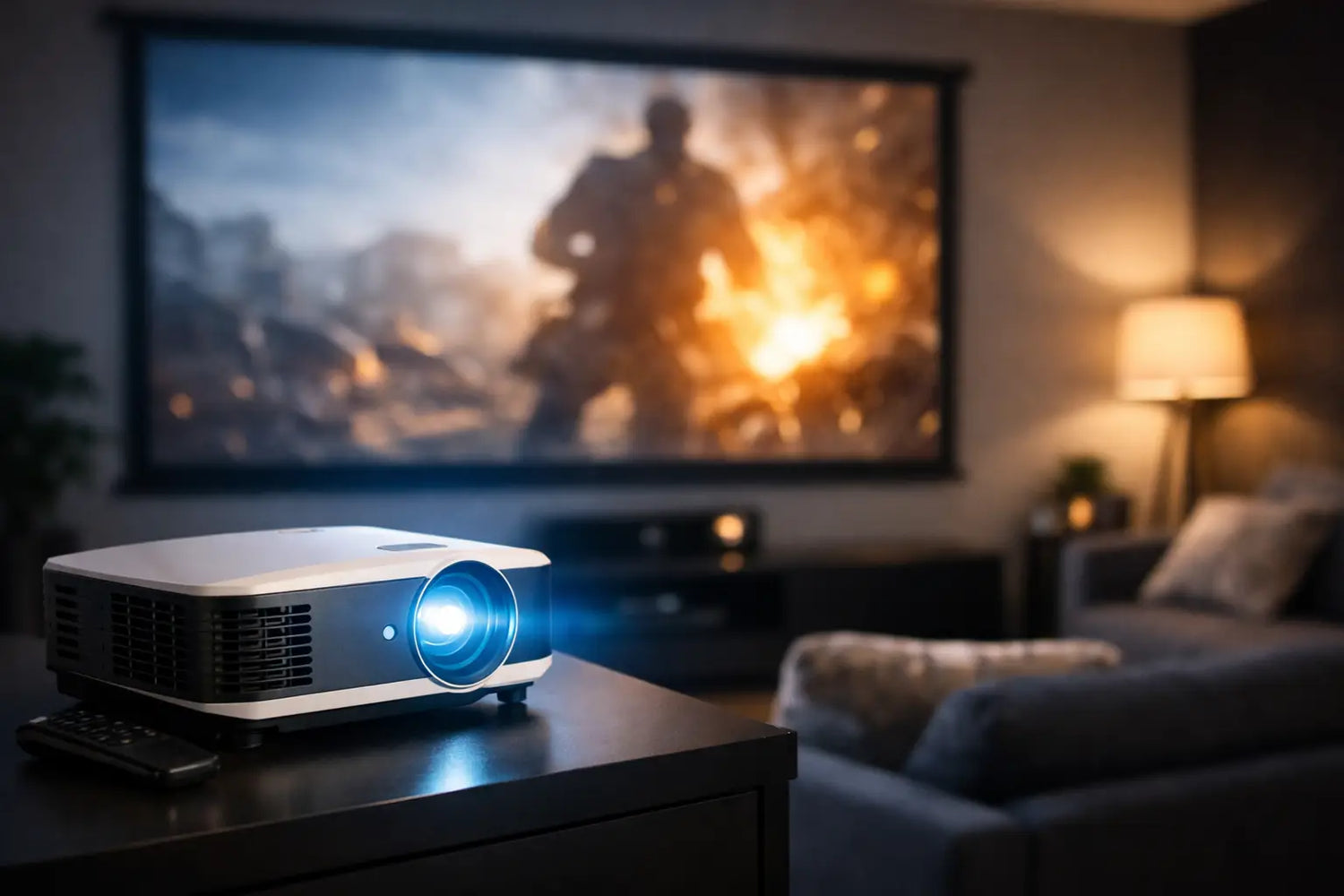
The wrong projector can make a beautiful room feel compromised fast. You spend on seating, speakers, and lighting, then end up with a washed-out image, fan noise you can hear in quiet scenes, or a throw distance that simply does not fit the wall. A smart projector buying guide starts with the room, not the spec sheet.
That is the difference between buying a projector and building a cinema experience. If you want movie nights that feel polished, sports that look vivid even with some ambient light, or a media room that impresses the moment the screen drops, you need to match the projector to the space, the content, and the level of finish you expect.
What this projector buying guide gets right first
Most shoppers start with resolution because it is easy to compare. 4K sounds better than 1080p, and on paper it is. But resolution alone will not save a projector that is too dim for your room, poorly placed for your screen size, or paired with the wrong screen surface.
Start with three questions. How much light is in the room when you actually watch content? How large do you want the image to be? And is this a casual family media space or a dedicated theater where performance matters more than compromise?
A bright living room projector and a dedicated cinema projector may both say 4K, but they are built for different jobs. One prioritizes punch and flexibility. The other may deliver deeper contrast, quieter operation, and a more refined image in controlled lighting. Neither is universally better. It depends on how you live.
Brightness matters more than most buyers expect
Brightness is usually listed in lumens, and this number affects whether your image looks rich and watchable or flat and tired. If your room has windows, light walls, or regular daytime use, brightness deserves serious attention.
For a dark, dedicated theater, you can often prioritize contrast and black levels over chasing the highest lumen number. In that setting, too much brightness can actually feel harsh on a modest screen. In a family room or open-plan living space, extra brightness is often the difference between a projector people use every week and one they only use at night.
Screen size changes the equation too. A projector lighting up a 100-inch screen has an easier job than one stretched to 150 inches. Bigger can be spectacular, but it also spreads available light over a larger area. That means the image can look dimmer unless the projector has the output to support it.
Resolution, sharpness, and what you really see
4K is the premium sweet spot for buyers investing in a serious home cinema or upscale media room. It looks cleaner, more detailed, and more refined on large screens, especially with high-quality movies, sports, and gaming content.
That said, 1080p is not automatically a bad choice. In smaller rooms, on more modest screen sizes, or in secondary entertainment areas, a strong Full HD projector can still look impressive. The right answer depends on viewing distance, source quality, and expectations. If you are building a room to feel elevated and future-ready, 4K is usually the move. If you want a value-conscious setup for lighter use, 1080p can still make sense.
Do not confuse listed resolution with overall image quality. Lens quality, processing, motion handling, contrast performance, and color accuracy all shape what you actually see. A projector with excellent optics and balanced performance often looks better than one that wins only on headline specs.
Throw distance can make or break the install
This is where many projector purchases go wrong. Throw distance is the space needed between the projector and the screen to create a certain image size. If you buy first and measure later, you may discover that your projector cannot fill the screen from the only practical mounting point.
Standard throw models work well in many dedicated rooms. Short throw and ultra short throw models are ideal when space is tight or ceiling mounting is not desirable. Ultra short throw projectors can sit close to the wall and still create a large image, which is excellent for sleek living spaces and cleaner room design.
But there are trade-offs. Ultra short throw models often rely more heavily on precise screen pairing and placement. Standard long throw projectors can offer stronger cinematic performance in dedicated rooms. If aesthetics, architecture, and installation flexibility matter, throw type should be decided early, not as an afterthought.
A projector buying guide should include the screen
A premium projector on the wrong wall is still the wrong setup. The screen is not an accessory. It is part of the image system.
If you are using a projector in a dedicated dark room, a standard white screen often delivers excellent results. If the room has ambient light, an ambient light rejecting screen can dramatically improve perceived contrast and image punch. For ultra short throw projectors, screen compatibility becomes even more critical because the geometry of the light path is different.
Motorized screens add convenience and preserve the room when the system is off. Fixed-frame screens tend to suit dedicated theaters where maximum flatness and visual presence matter. The right choice depends on whether the room is a cinema-first environment or a shared living space that needs to look clean every day.
Contrast and black levels separate good from premium
Brightness gets attention because it is easy to market. Contrast is what makes a movie feel cinematic. Strong contrast gives depth to shadows, dimensionality to dark scenes, and that rich, high-end image quality people notice immediately even if they do not know the spec behind it.
If your room can be fully darkened, contrast becomes a major decision point. That is where premium projectors justify their place. If your room has constant ambient light, contrast still matters, but brightness and screen choice may have more impact on day-to-day satisfaction.
This is why premium buyers should think in systems, not isolated products. The projector, room lighting, wall color, screen material, and speaker placement all influence the finished result.
Gaming, sports, and streaming need different priorities
Not every projector is aimed at movie purists. If your room is used for gaming, input lag becomes important. Lower input lag makes gameplay feel more responsive, especially in competitive titles.
For sports, brightness and motion handling matter more than perfect black levels. Fast action should look smooth, and the image needs enough punch to stay exciting with a few lights on. For streaming and mixed family use, smart features may be convenient, but built-in apps should not outweigh core image quality.
Think honestly about what the projector will do most often. A model that is brilliant for film lovers in a dark theater may not be the best fit for Sunday sports in a bright great room.
Audio, noise, and the full-room experience
Projectors are often judged by image first, but the full-room experience matters. Fan noise can become distracting in quieter scenes. Mounting location, projector size, and operating mode all affect how noticeable it will be.
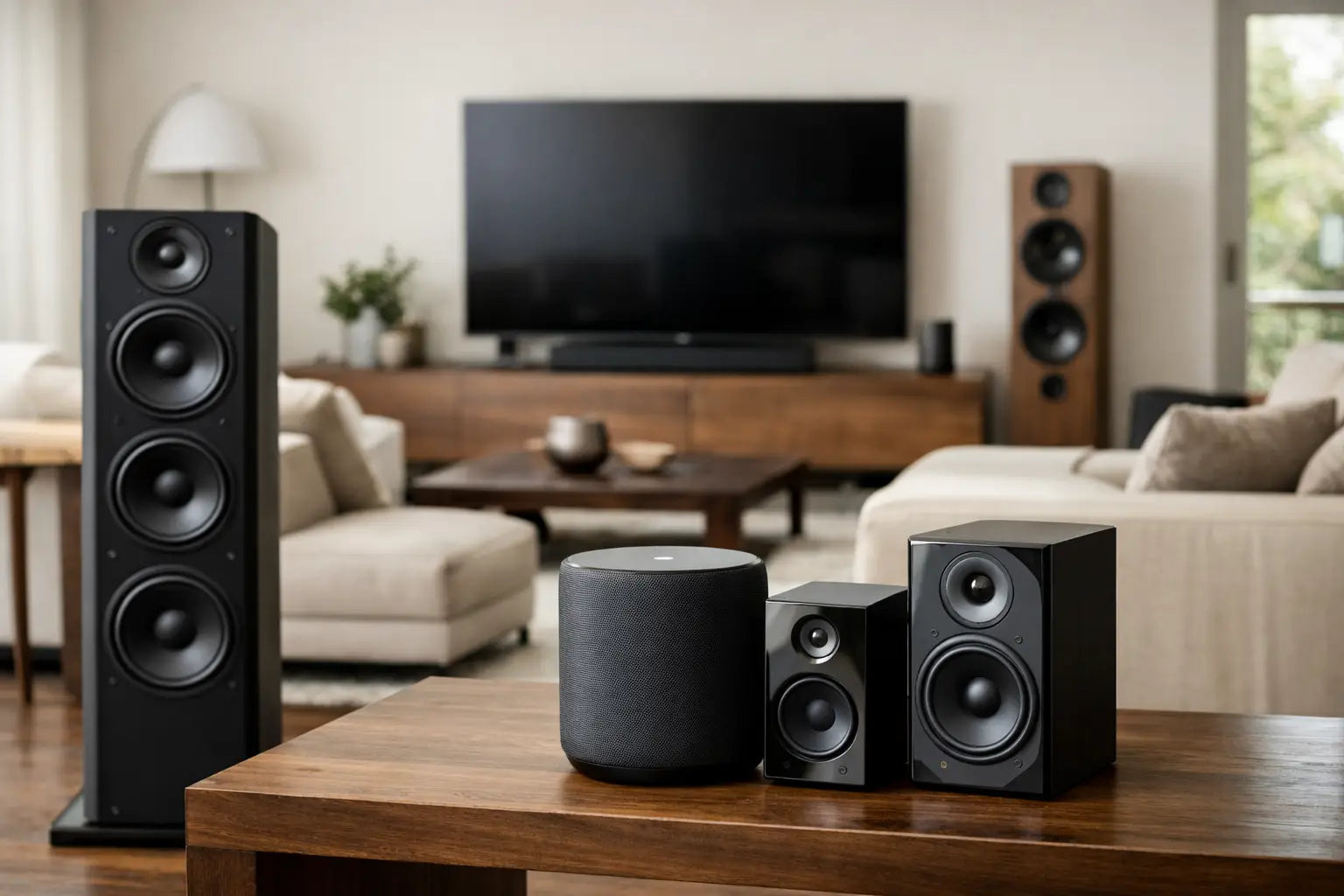
And while some projectors include built-in speakers, serious buyers should treat them as a convenience, not the destination. A projector deserves proper sound support, whether that means a high-performance soundbar in a living space or a full surround system in a dedicated theater. Big-screen visuals without scale and impact in the audio never feel fully finished.
When to spend more and when not to
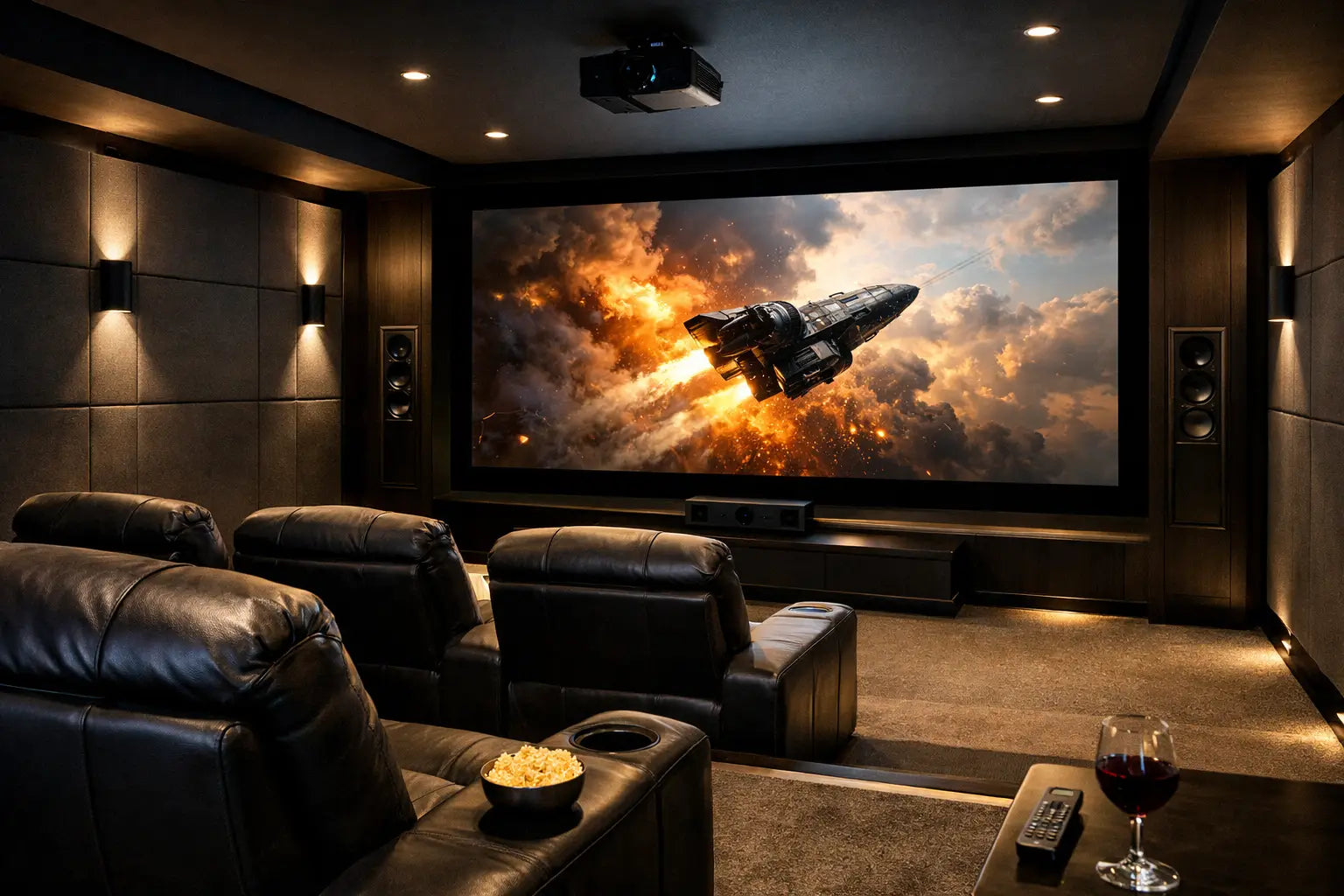
Spend more when the room is dedicated, the screen is large, the seating is intentional, and you care about image refinement. That is where better optics, stronger contrast, cleaner processing, and installation flexibility actually pay you back every time you watch.
Spend carefully when the room has unavoidable ambient light, casual use patterns, or architectural limits that cap what performance you can realistically enjoy. In those cases, smart selection beats overspending on specs the room cannot reveal.
At AmpliMart, that project-first thinking is what separates a premium result from a pile of expensive boxes. The best projector is not the one with the loudest marketing. It is the one that fits the room, complements the screen, and delivers the kind of experience that makes staying home feel like an upgrade.
Final advice before you choose
Measure the room. Decide your real screen size. Be honest about light control. Then choose the projector as part of a complete visual system, not as a standalone gadget. Get that right, and every movie night, match day, and family watch party feels bigger, cleaner, and far more luxurious than the average living room has any right to be.

Leave a comment
This site is protected by hCaptcha and the hCaptcha Privacy Policy and Terms of Service apply.