

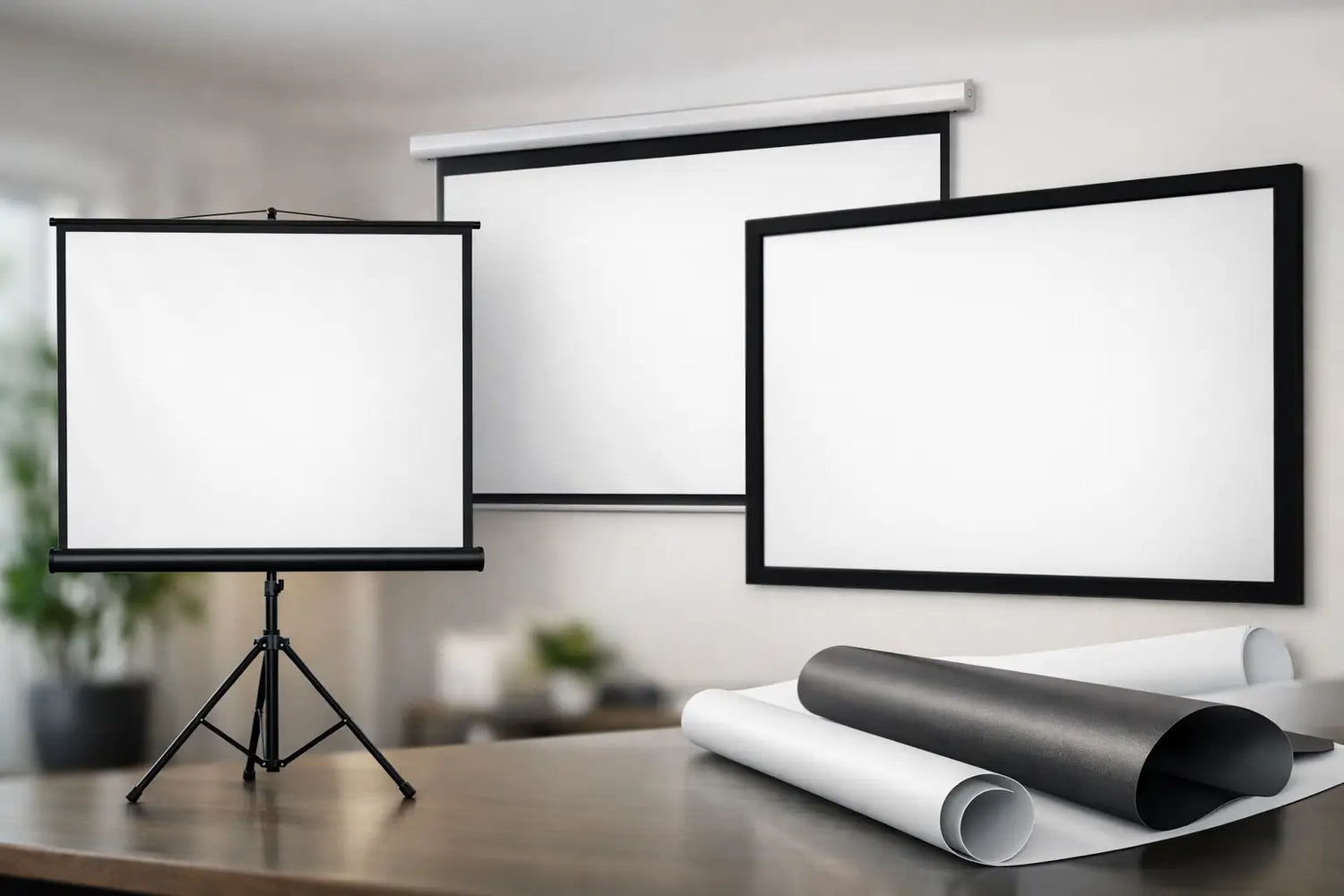
A great projector can still look disappointing on the wrong screen. That is the mistake many buyers make when comparing projection screen types - they spend weeks choosing brightness, resolution, and throw distance, then treat the screen like an accessory. It is not. The screen is the surface your image lives on, and it has a direct effect on contrast, color, perceived sharpness, and how polished the entire room feels.
If you are building a serious media room, upgrading a living space, or planning a clean installed setup, the right screen choice changes everything. Some screens are built for absolute cinematic performance in dark rooms. Others are made to hold up in family spaces with windows, ambient light, and daily use. The best option depends less on hype and more on how your room actually works.
Why projection screen types are not interchangeable
At a glance, many screens look similar. In practice, they solve very different problems. A fixed frame screen is designed to stay perfectly tensioned for the most consistent image. A motorized screen prioritizes convenience and clean integration. An ambient light rejecting screen is engineered to preserve contrast when the room is not fully dark. An acoustically transparent screen lets you place speakers behind the image for a true cinema layout.
That is why choosing by price alone usually backfires. The cheapest screen may give you visible waves, hot spotting, weak black levels, or a look that never matches the projector you paid for. Premium rooms deserve better than a compromised final surface.
The main projection screen types to know
Fixed frame screens
If picture quality comes first, fixed frame screens are often the benchmark. The screen material is stretched over a rigid frame, which helps keep the surface flat and stable. That matters because a projector image is only as clean as the surface it hits.
This style is ideal for dedicated theater rooms, media rooms, and any setup where the screen will remain permanently visible. It delivers a refined, built-for-purpose look, and it usually gives you the most consistent image across the entire viewing area.
The trade-off is flexibility. A fixed frame screen does not disappear when not in use, so it works best in spaces designed around entertainment rather than multipurpose rooms.
Motorized screens
Motorized screens are the answer when you want a premium cinema experience without dedicating an entire wall to it. With the press of a button, the screen drops into place and retracts when the room shifts back to everyday living.
This makes them especially attractive in living rooms, villas, open-plan spaces, and formal entertainment areas where clean design matters. They also pair well with custom installations, ceiling recesses, and cabinet-integrated solutions.
Not all motorized screens perform equally, though. Lower-quality options can develop edge curling or waviness over time. Tensioned motorized screens typically command a higher price, but they offer a flatter viewing surface and a far more upscale result.
Manual pull-down screens
Manual pull-down screens still have a place, but mostly in value-driven or light-duty applications. They are straightforward, familiar, and less expensive than motorized models.
For a casual setup, a classroom-style environment, or occasional use, they can do the job. For a premium home cinema or design-led installation, they usually feel like a compromise. The mechanism is less elegant, and long-term flatness is often not on the same level as fixed frame or tensioned motorized options.
Floor-rising screens
A floor-rising screen is designed to rise vertically from a base cabinet rather than drop from above. This is a smart solution when wall or ceiling mounting is not practical, or when the room design calls for something more discreet.
These screens are popular in luxury interiors because they can disappear into furniture or cabinetry. They also work well in front of windows or feature walls. The catch is cost. A quality floor-rising system is usually a premium choice, and installation planning matters.
Screen materials matter as much as the format
Matte white screens
Matte white is the classic screen surface for a reason. It offers wide viewing angles, balanced color reproduction, and reliable performance in rooms you can darken properly. If your goal is a true theater-style environment, matte white remains one of the strongest choices.
Its weakness is ambient light. In a bright living room, a standard white screen can lose contrast quickly, especially during daytime viewing.
Gray screens
Gray screens are designed to deepen perceived black levels and improve contrast in spaces with some ambient light. They can be a smart middle ground when the room is not a fully controlled theater but still needs a strong image.
The balance is brightness. Gray materials typically reflect less light than white screens, so they pair best with projectors that have enough output to compensate.
Ambient light rejecting screens
For many modern homes, this is where things get serious. Ambient light rejecting, or ALR, screens are built to help the image stand up against room light that would wash out a standard surface. If you are using a projector in a living room, media lounge, or open space with windows, ALR can be the difference between a flat picture and a compelling one.
That said, ALR is not magic. Performance depends on projector placement, room layout, and the specific screen design. Some ALR materials are optimized for ceiling-mounted projectors, while others are intended for ultra short throw models. Use the wrong combination and performance can suffer.
Acoustically transparent screens
If you want the most authentic cinema layout, acoustically transparent screens deserve a close look. These materials allow sound to pass through the screen so you can place front speakers directly behind the image.
This creates better alignment between what you see and what you hear. Dialogue comes from the center of the screen instead of below it, and the front soundstage feels more natural and immersive.
The compromise is subtle but real. Some acoustically transparent materials can reduce brightness slightly or introduce texture if viewed too closely. With good design and proper viewing distance, those downsides are often minor compared to the upgrade in realism.
Which projection screen types fit different rooms?
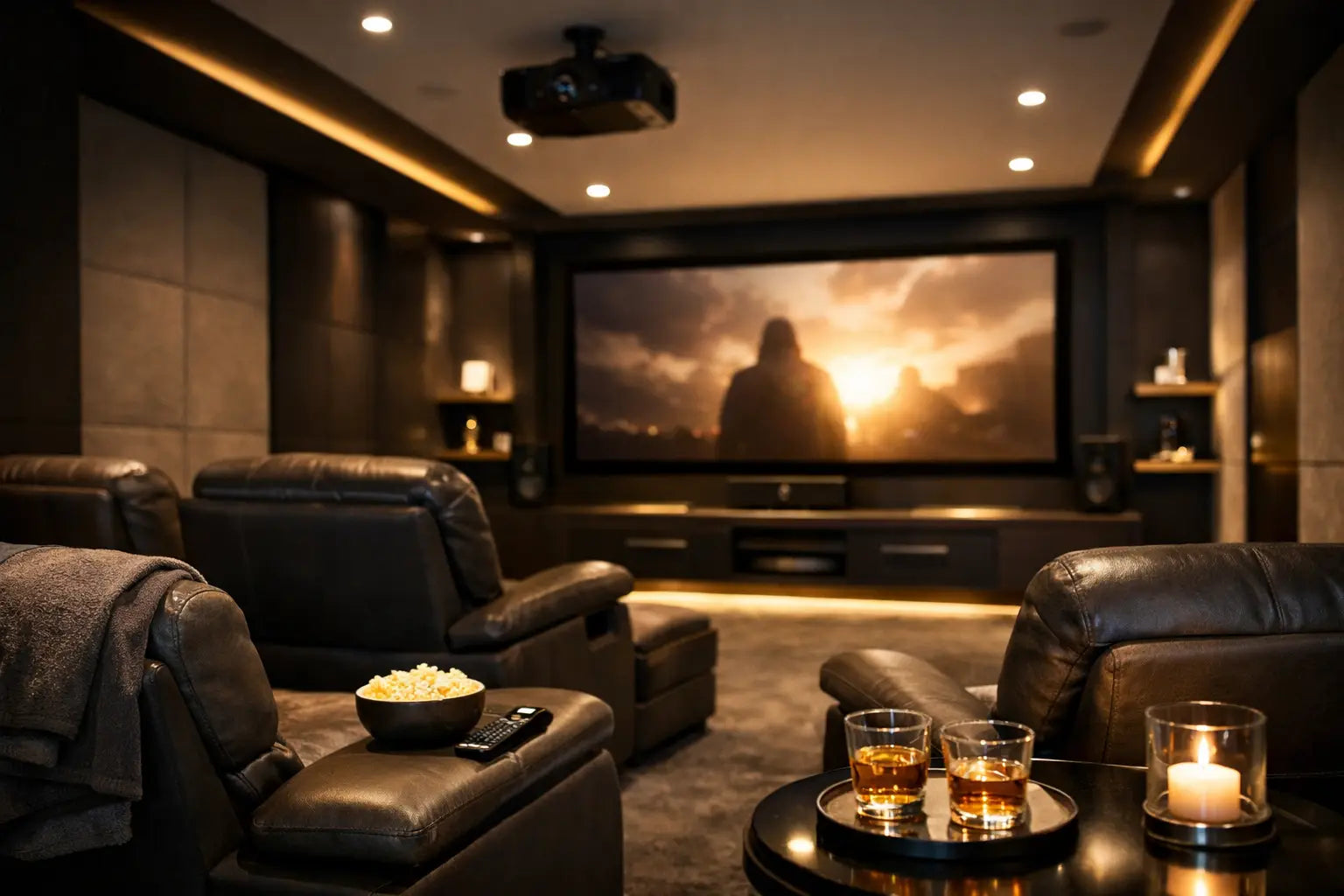
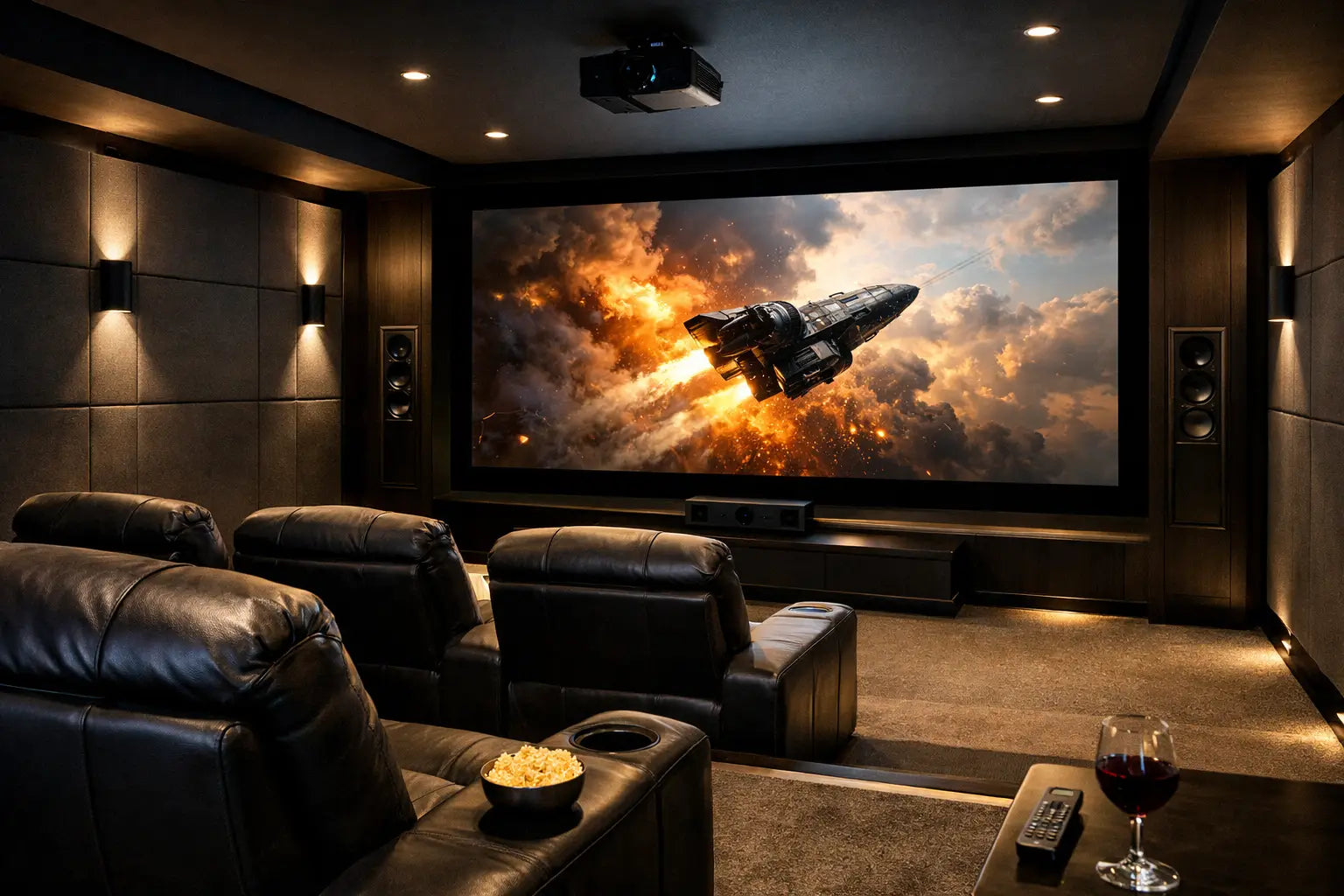
A dedicated dark theater room usually benefits most from a fixed frame screen with matte white or acoustically transparent material. This setup is about image integrity and cinematic immersion, so convenience matters less than pure performance.
A family living room often needs a different answer. If the screen has to disappear, a motorized model makes sense. If the room gets ambient light during daytime use, ALR material may be the smarter move than a standard white surface.
A design-first luxury space may lean toward a recessed motorized or floor-rising screen because visual cleanliness is part of the value. In that case, the best screen is not just the one with the strongest specs. It is the one that protects the room aesthetic while still delivering a premium image.
For multiuse spaces, flexibility often wins. A perfectly optimized fixed frame setup can be amazing, but if it makes the room feel dominated by a large black rectangle all day, it may not be the right lifestyle fit.
Size, gain, and viewing angles
Screen type is only part of the decision. Size has to match your seating distance, projector capability, and room proportions. Bigger is not automatically better if brightness drops too far or the image overwhelms the space.
Then there is gain, which describes how much light a screen reflects back toward the audience. Higher-gain screens can boost brightness, but they may narrow viewing angles or create hot spotting. Lower-gain materials tend to look more natural and even, especially in rooms where people sit across a wider area.
This is where professional planning pays off. The right screen is a combination of form factor, material, size, and projector pairing. Treating these as separate purchases is where many expensive setups start to underperform.
When to spend more and when not to
If you have invested in a premium projector, architectural lighting, acoustic treatment, and a clean room design, this is not the place to cut corners. The screen is too visible and too central to the final result. A cheap screen can make an expensive projector look average.
On the other hand, not every room needs the most specialized material on the market. If you watch mostly at night in a darkened room, a well-made matte white fixed frame screen may outperform a trendy ALR product that is unnecessary for your use case. More expensive does not always mean better. Better means correctly matched.
That is the difference between buying equipment and building a real viewing environment. At AmpliMart, that distinction matters because customers are not chasing random components. They are investing in a room that should feel elevated every time the lights go down.
The best screen choice is the one that respects your projector, your room, and the way you actually live. Get that part right, and the picture does more than look bigger. It feels finished.

Leave a comment
This site is protected by hCaptcha and the hCaptcha Privacy Policy and Terms of Service apply.