

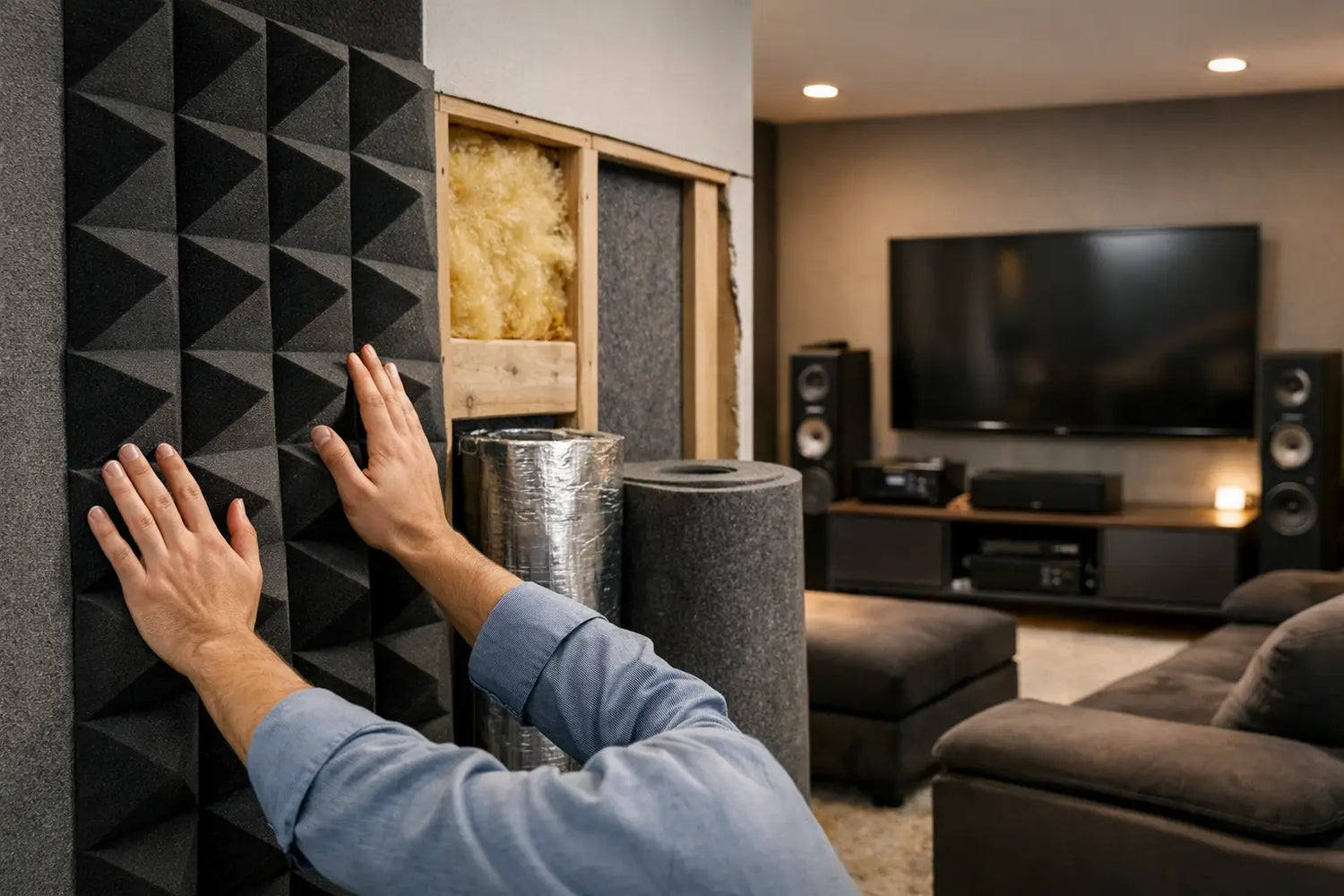
That moment when your subwoofer hits hard and someone in the next room hears more of the movie than you do - that is when people start asking how to soundproof a media room properly. Not with thin foam stuck to the wall. Not with a rushed fix. With the kind of planning that gives you deeper bass, clearer dialog, and a room that feels purpose-built.
A serious media room needs two things working together. It needs acoustic control inside the room, so your system sounds polished, and it needs sound isolation, so noise stays where it belongs. Those are related, but they are not the same. If you confuse them, you can spend real money and still hear the bass in the hallway.
How to soundproof a media room starts with the weak points
Sound escapes through air gaps, shared structure, and lightweight surfaces. In most homes, the biggest leaks are the door, ceiling, and walls that connect directly to other living areas. Low frequencies are the hardest to contain because bass energy travels through framing, drywall, and floor structure with surprising ease.
This is why a premium room build is never about one product. It is about layers. Mass helps block sound. Damping helps reduce vibration. Decoupling helps stop structure-borne transfer. Sealing closes the tiny gaps that ruin everything else. Miss one of those pieces and performance drops fast.
If you are building from scratch, this is the right time to do it properly. If you are upgrading an existing room, you can still make a major improvement, but the strategy has to match the room. A second-floor bonus room over a family area needs a different approach than a basement theater with concrete walls.
What actually works when soundproofing a media room
The most effective wall and ceiling systems use a combination of dense materials and mechanical separation. Standard drywall on studs does very little against movie-level playback. Add another layer of drywall with damping compound between layers, and isolation improves. Mount the wall or ceiling on resilient channels or isolation clips, and the improvement can be dramatic because the drywall is no longer directly tied to the framing in the same way.
For many homeowners, double drywall with damping compound is the sweet spot. It adds real performance without requiring a complete room rebuild. If you are designing a dedicated cinema and want stronger isolation, decoupled stud walls or staggered stud construction are worth considering. They take more space and budget, but they reduce sound transfer far better than cosmetic treatments.
Insulation matters too, but not in the way many people think. Fiberglass or mineral wool inside a wall cavity does not magically soundproof a room on its own. What it does is reduce resonance inside the cavity, which helps the full wall system perform better. Mineral wool is often favored in premium installs because it is dense, stable, and effective in these assemblies.
The door is often the deal-breaker
A hollow-core interior door can undermine an otherwise excellent media room. It is light, leaky, and easy for sound to push through. Replacing it with a solid-core door is one of the smartest upgrades you can make. Add perimeter seals and an automatic door bottom, and you close one of the most common noise paths.
If the room opens into a quiet living space or bedroom wing, a communicating door setup can take things further. That means two sealed doors with an air gap between them. It is not always practical, but it is highly effective and instantly makes the room feel more private and substantial.
Ceiling treatment matters more than most people expect
If your media room sits below bedrooms or a home office, the ceiling deserves serious attention. Footfall noise from above is one issue, but movie sound traveling upward is usually the bigger problem. Isolation clips, hat channel, insulation, and multiple drywall layers can transform ceiling performance.
If the room is below a hard floor surface upstairs, adding underlayment or carpet above can also help. This is one of those it-depends situations. If you only treat the ceiling from below but leave a very live, reflective floor above, some impact noise will remain. The best result usually comes from addressing both sides of the assembly.
Floors, windows, and HVAC can ruin the result
Floor strategy depends on what the room is built on. A concrete slab is naturally better at containing sound than a framed wood floor. In a basement, your focus may be less about stopping sound through the floor and more about reducing reflections inside the room with carpet or a substantial rug. On an upper floor, the structure itself can transmit bass, so underlayment and floor isolation become more relevant.
Windows are another known weak point. If your media room has large glass areas, expect leakage. Heavy drapes help slightly, mostly with reflections, but they do not deliver serious isolation. Laminated glass, secondary window systems, or reducing the size and number of windows works better. In a dedicated theater, fewer windows almost always leads to a better audio and viewing experience.
Then there is HVAC, the detail people forget until the first movie night. Sound moves through ducts easily, and so does equipment noise from air movement. A well-designed room uses lined ducts, longer duct runs, acoustic flex sections where appropriate, and vent placement that avoids becoming a direct sound tunnel. Quiet climate control is part of the luxury experience. No one invests in a premium projector and cinema seating to hear the air system during a quiet scene.
Acoustic panels are not soundproofing, but you still need them
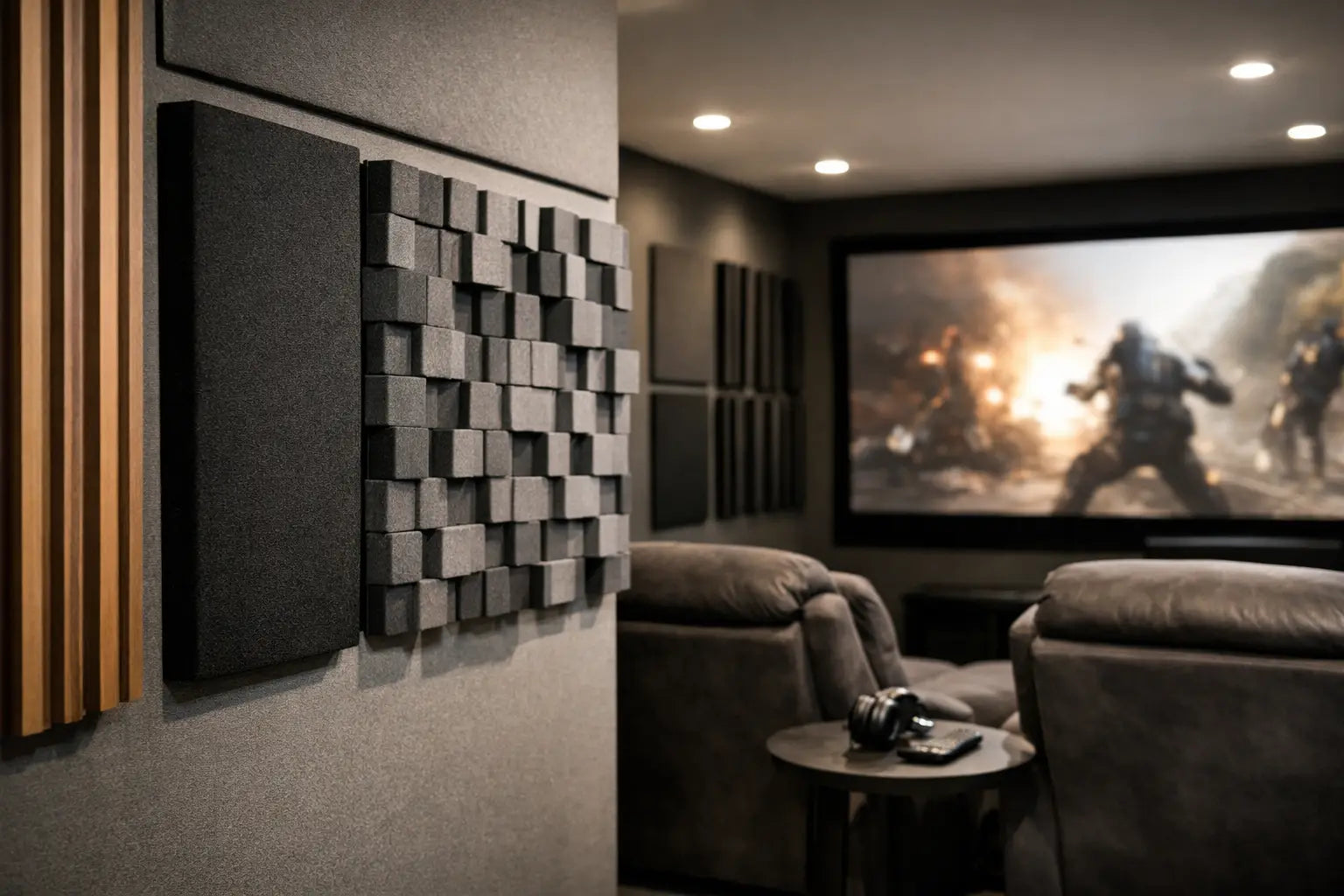
This is where many media rooms go off course. Acoustic panels improve the sound inside the room. They reduce echo, tame reflections, and make your speakers perform the way they should. They do not stop much sound from leaving the room.
That does not make them optional. In fact, once the shell is properly isolated, interior acoustic treatment becomes even more valuable. You hear more of your system and less of the room. Dialog becomes cleaner. Surround effects place more accurately. Bass gets tighter when paired with the right subwoofer positioning and low-frequency control.
A polished media room usually combines both approaches - sound isolation in the construction, acoustic treatment in the finish. That is how you get a room that feels expensive because it performs like one.
How to soundproof a media room without wasting money
Start by deciding whether your goal is moderate improvement or near-theater isolation. If you just want to reduce disturbance to the rest of the house, focus first on the door, wall mass, ceiling treatment, and sealing gaps. If you want to play action films at serious volume late at night, plan for a more complete build with decoupling and stronger room assembly design.
It is also smart to identify where the noise matters most. If one wall backs onto a garage, that wall may not need the same build-up as the wall behind a bedroom. If the room is in a basement with one exposed side and one shared side, your budget should follow the shared side first. Smart soundproofing is targeted, not generic.
This is also where professional planning pays off. A premium media room is a system, not a shopping cart. Speakers, subs, seating, screen placement, acoustic panels, and isolation details all affect each other. At AmpliMart, that project-first mindset is exactly what separates a room full of expensive gear from a finished cinema experience.
Common mistakes that cost performance
The biggest mistake is relying on foam panels as a soundproofing solution. They are fine for reducing some reflections, but they do very little for isolation. Another mistake is leaving gaps around outlets, recessed lighting, and door frames. Sound finds those openings fast.
People also underestimate bass. A room may seem well controlled at normal TV volume, then fall apart as soon as a subwoofer starts working. That is because low frequencies expose weak construction immediately. If your system includes serious low-end performance, your room build needs to respect that from day one.
The last mistake is treating soundproofing as separate from room design. The best media rooms look clean because the performance elements are integrated from the start. Hidden insulation, properly built walls, discreet acoustic panels, and quiet ventilation create a room that feels refined rather than overtreated.
If you want your media room to sound powerful without turning the rest of the house into an extension of the soundtrack, build the shell with intent. The gear deserves it, the room feels better for it, and the first time the movie starts, you will hear exactly where the investment went.

Leave a comment
This site is protected by hCaptcha and the hCaptcha Privacy Policy and Terms of Service apply.