

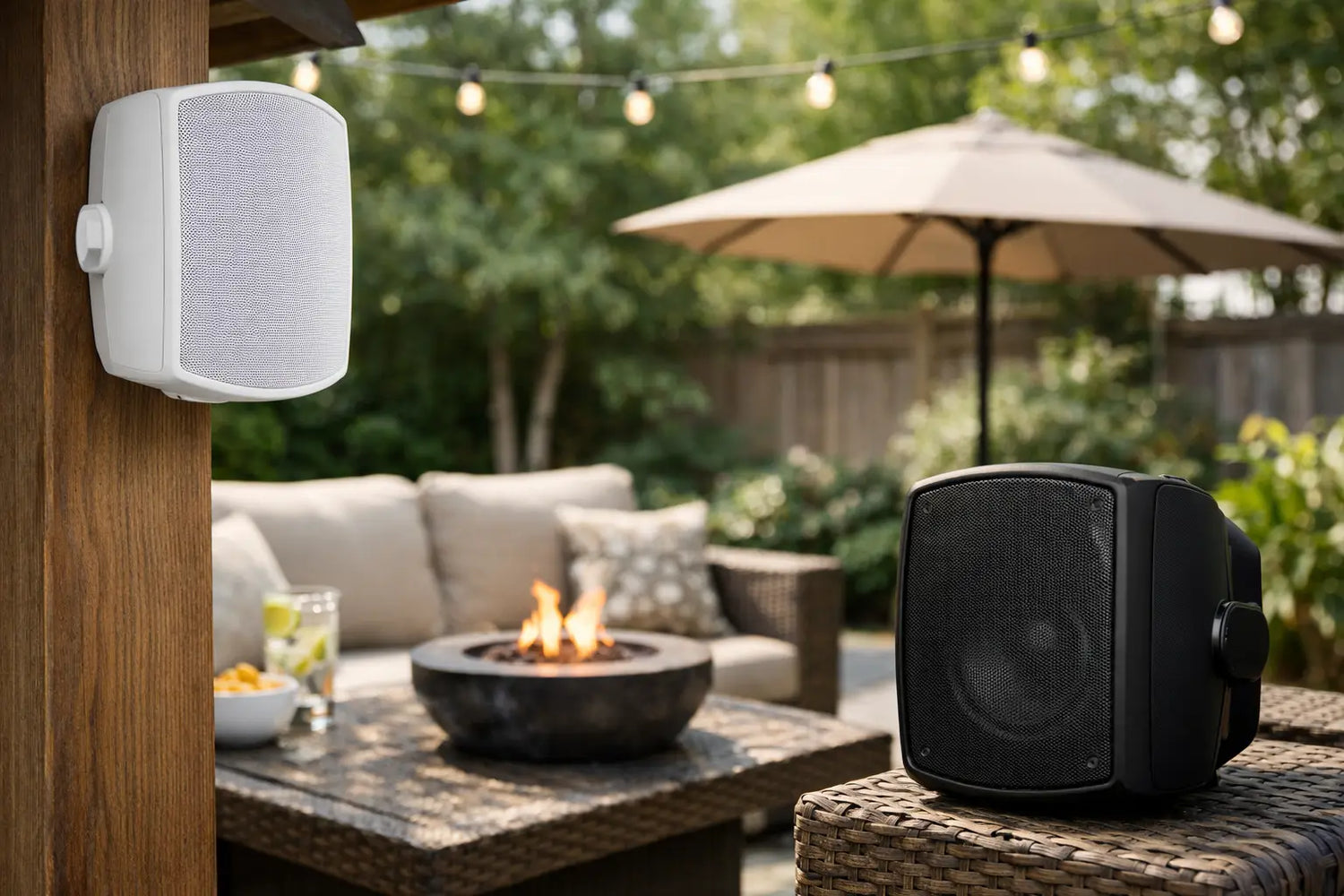
A patio with weak sound never feels finished. You can have the grill going, the lighting dialed in, and the seating exactly right, but if the music is thin, harsh, or disappears the moment people start talking, the whole setup loses impact. Choosing the right outdoor speakers for patio spaces is less about buying something labeled weatherproof and more about building an outdoor system that sounds full, controlled, and effortless.
That matters because patios are acoustically unforgiving. Indoors, walls help reinforce bass and contain the sound. Outside, audio has open air to escape into, so speakers need to work harder to create presence without becoming shouty. The best result is not just louder sound. It is even coverage, clear vocals, and a listening experience that feels upscale from every chair, not just the seat closest to the speaker.
What makes outdoor speakers for patio areas different
Patio audio lives in a harsher world than indoor HiFi. Heat, humidity, dust, rain, and UV exposure all take a toll on cabinets, grilles, and driver surrounds. A speaker that sounds excellent in a living room can fail fast outside, even under a covered roof. That is why real outdoor models use weather-resistant materials, sealed enclosures, and hardware built to handle the elements.
But durability is only half the story. Good outdoor speakers also need a voicing that suits open-air listening. Since bass naturally thins out outdoors, many premium patio speakers are tuned to sound fuller and more balanced at moderate volume. That makes a major difference during dinner, weekend gatherings, or late-night lounging when you want atmosphere, not aggression.
There is also the design factor. On a premium patio, the speakers should not look like an afterthought. Clean mounting, discreet finishes, and smart placement matter just as much as wattage. For design-conscious homeowners, the best system is one that blends into the space while still delivering serious performance.
How to choose outdoor speakers for patio performance
The first question is coverage. A compact pair may be enough for a small covered patio with defined seating. A larger space with a dining zone, lounge area, and poolside extension often needs more than two speakers if you want even sound. This is where many buyers make the wrong move. They install one powerful pair, turn the volume up, and end up with hot spots near the speakers and weak sound everywhere else.
A better approach is to spread sound more evenly with the right number of speakers at lower volume. The result feels richer and more refined. Conversation stays comfortable, and nobody near the wall-mounted speaker gets blasted while everyone else strains to hear the playlist.
Power handling matters too, but not in the usual bragging-rights way. More wattage does not automatically mean better sound. What matters is pairing speakers with an amplifier or AV setup that can drive them cleanly without distortion. On a patio, distorted audio becomes fatiguing fast because there are no room boundaries to soften it.
Sensitivity is another overlooked detail. Higher-sensitivity speakers can play louder with less power, which is useful outdoors where you need extra output. If you are building a full entertainment zone, speaker efficiency and amplifier quality should be considered together, not separately.
Then there is bass. If you expect nightclub-style low end from a pair of small wall speakers on an open patio, expectations need a reset. Some premium outdoor speakers deliver impressive punch, but deep bass outside usually requires either larger cabinets, a dedicated outdoor subwoofer, or careful integration with nearby architectural elements. It depends on how you use the space. Background music for family dinners has very different demands than weekend parties or outdoor movie nights.
Patio speaker types and where each one works best
Wall-mounted outdoor speakers are the most common choice, and for good reason. They are practical, reliable, and capable of strong performance when mounted correctly under eaves, pergolas, or covered patio structures. They work especially well when you want direct sound aimed toward the seating area.
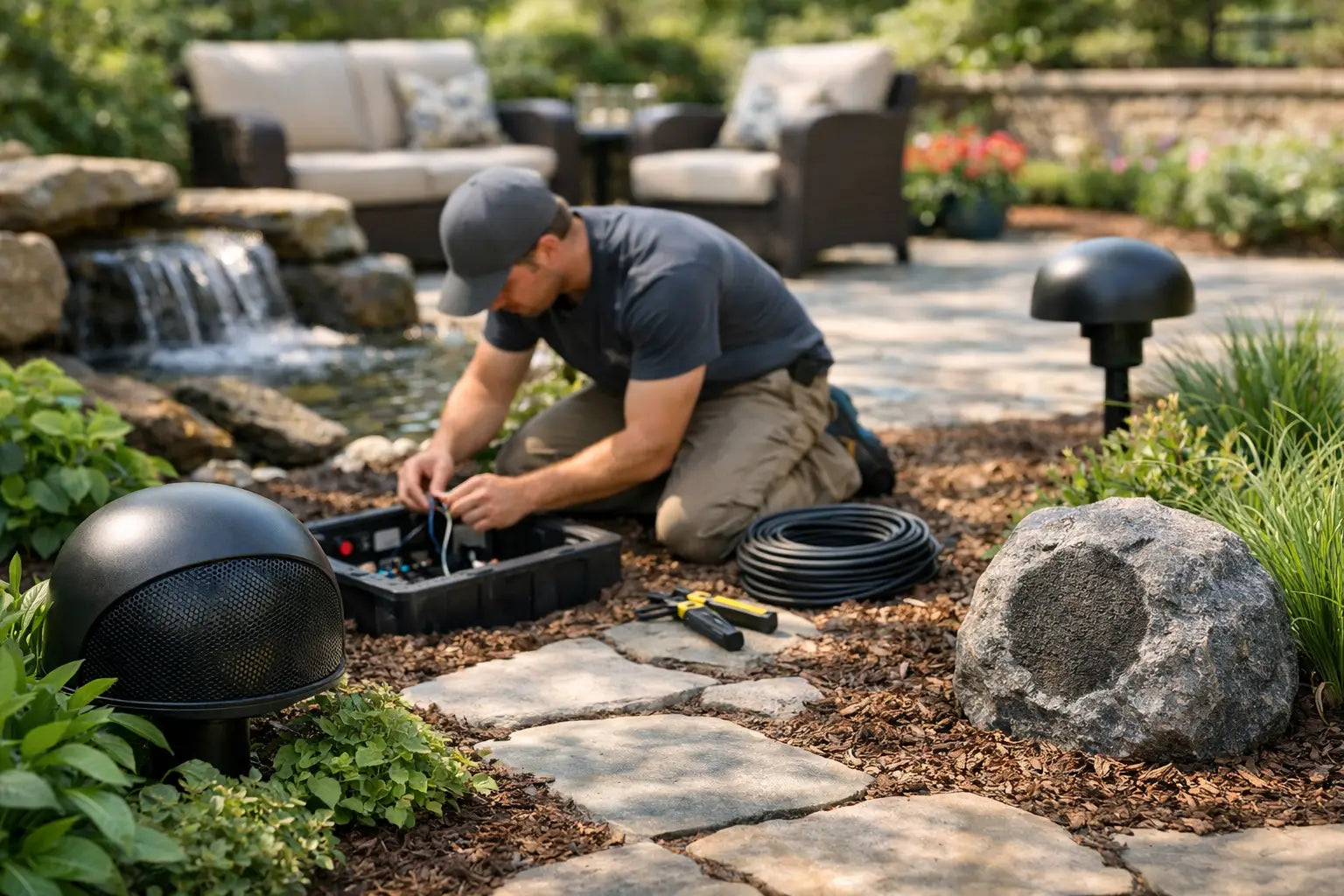
Rock and landscape speakers suit garden-edge patios and open entertaining spaces where visible wall mounting would interrupt the design. They are easier to integrate visually, but they need thoughtful placement to avoid sounding detached from the main seating zone. They are often best when the patio connects to a lawn, pool, or landscaped border rather than standing alone as a small terrace.
In-ceiling or in-soffit outdoor-rated speakers can look exceptionally clean in covered patios. They are ideal for homeowners who want minimal visual clutter. The trade-off is that they need more planning and the right ceiling structure. They can sound excellent, but only if speaker spacing and aiming are handled properly. A beautiful flush installation with poor coverage is still poor audio.
Surface-mounted subwoofers and buried landscape subs take things further for customers who want truly premium outdoor sound. They are not necessary for every project, but they can transform large patios where music needs body and scale. If your outdoor area is part of a broader luxury entertainment setup, adding low-end support often separates a decent system from one that feels complete.
Placement matters more than most people expect
Even the best speaker can disappoint if it is mounted too high, aimed badly, or placed too far apart. For patio listening, speakers should usually be directed toward the main seating area rather than firing across open yard space. That sounds obvious, but many installations still prioritize convenience over performance.
Mounting under cover helps protect the speaker and usually improves sound consistency. It reduces direct exposure to rain and sun while keeping the audio focused closer to where people actually sit. Height should be high enough for protection and aesthetics, but not so high that the sound drops from above with no intimacy.
Spacing needs balance. Too close together and you lose coverage width. Too far apart and the middle collapses, leaving dead zones. On larger patios, using more speakers at lower volume almost always sounds better than pushing a single pair too hard.
This is also where clean installation earns its value. Exposed wire runs, awkward brackets, and mismatched finishes can cheapen an otherwise expensive outdoor living area. Premium patio audio should feel integrated from day one, not added as an afterthought.
Weather resistance is not all the same
Not every outdoor speaker is built for the same environment. A covered patio in a dry climate places different demands on equipment than a coastal property dealing with salt air, wind, and heavy humidity. This is one of those areas where buying on price alone can get expensive later.
Look beyond generic marketing claims. Materials, grille quality, mounting hardware, and enclosure design all affect longevity. Marine-grade components may be worth considering in harsher regions. If your patio gets intense afternoon sun, UV resistance becomes a bigger factor than many shoppers realize.
The finish matters too. White and black remain the safest choices for most homes, but the real premium move is choosing a speaker that disappears into the architecture without compromising placement. Great outdoor audio should complement the patio design, not compete with it.
Building a patio system that feels premium
A truly satisfying patio setup is not just about the speakers. Source equipment, amplification, control, and zoning all shape the experience. If you entertain often, being able to control volume easily from a phone or dedicated controller matters. If your patio is part of a larger home AV plan, multi-zone integration may be the smarter route.
This is where specialist guidance pays off. A patio audio system should match the size of the space, the way you entertain, and the finish level of the property. Some customers need a simple two-speaker solution for casual listening. Others want an outdoor extension of their indoor entertainment lifestyle, with refined sound, discreet installation, and room to expand later. AmpliMart serves that second mindset especially well because premium audio performs best when the whole system is considered, not just the speaker spec sheet.
For buyers investing in upscale outdoor living, the smartest move is to think beyond product labels and focus on outcome. You want music that fills the patio evenly, survives the seasons, and looks like it belongs there. When the system is right, your patio stops being just an outdoor seating area and starts feeling like a true entertainment space people want to stay in long after sunset.
The best patio sound does not call attention to the hardware. It simply makes every gathering feel better, which is exactly how premium audio should work.

Leave a comment
This site is protected by hCaptcha and the hCaptcha Privacy Policy and Terms of Service apply.