

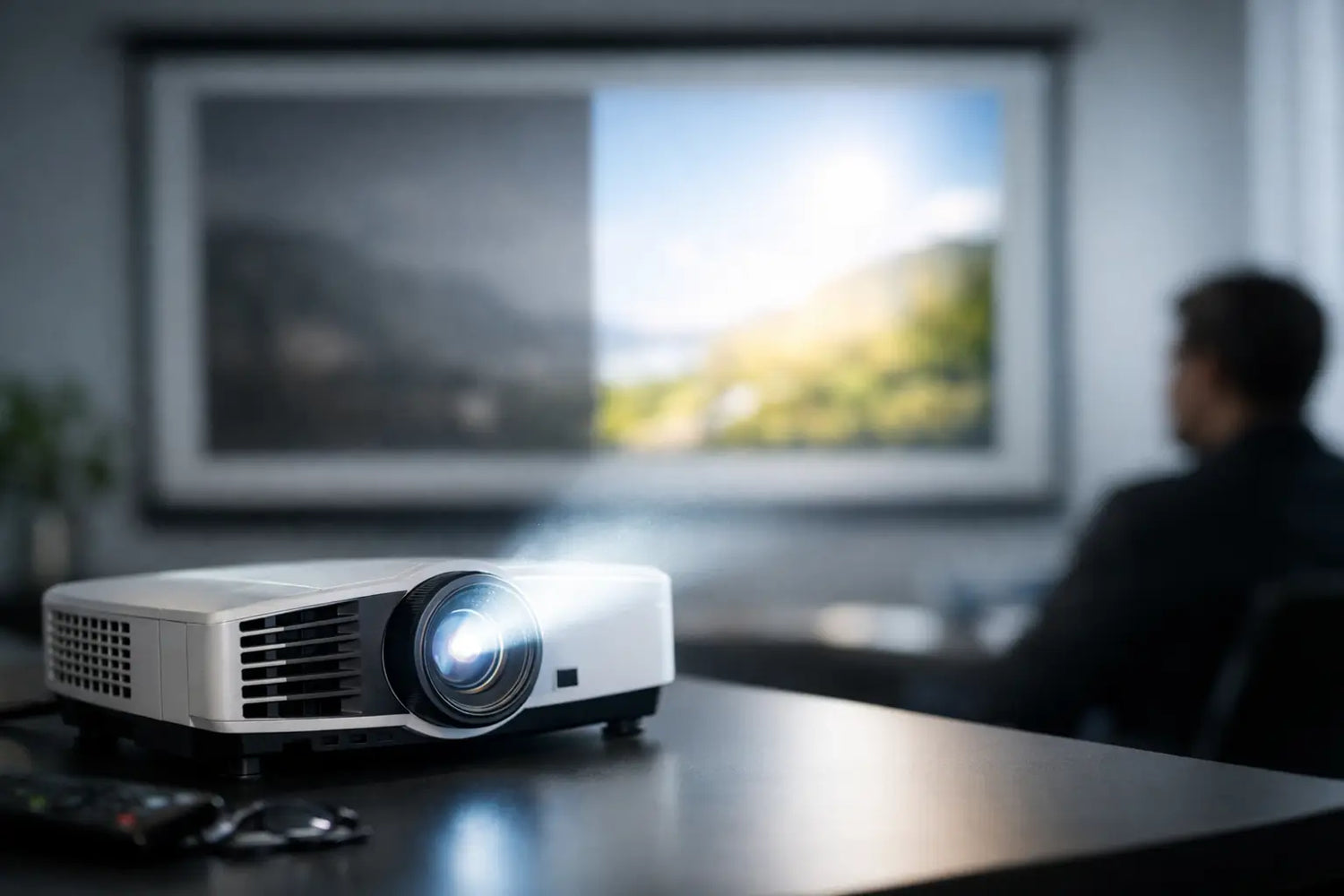
A projector that looks stunning in a dark demo room can fall apart the moment it lands in a bright living space. That is why knowing how to choose projector brightness matters so much. Get this wrong, and even a premium projector can look washed out, flat, and underwhelming.
Brightness is not just a spec to compare on a product page. It is a practical decision tied to your room, your screen, and the kind of experience you want. In a dedicated cinema room, too much brightness can feel harsh. In a family room with windows, too little brightness is a fast route to disappointment.
How to choose projector brightness without guessing
The simplest way to think about projector brightness is this: the more ambient light you have and the larger your screen is, the more brightness you need. Projector brightness is usually measured in lumens, and that number tells you how much light the projector can produce. But the right lumen rating depends on where and how you plan to use it.
A compact projector with moderate brightness may look excellent on a 100-inch screen in a darkened media room. The same projector on a 150-inch screen in a bright open-plan space will struggle. This is where buyers often overspend on the wrong feature or underspec the one that matters most.
If you want a clean rule of thumb, start by asking three questions. How much light enters the room? How big will the projected image be? And will you mostly watch movies, sports, gaming, or presentations? Those answers narrow the field quickly.
Room light changes everything
Ambient light is the first filter. In a true home theater with blackout curtains, dark wall finishes, and controlled lighting, you can prioritize contrast and color performance without chasing the highest lumen number. In that setting, many quality home cinema projectors perform beautifully with moderate brightness.
In a living room, brightness becomes far more important. Sunlight, white walls, ceiling fixtures, and reflected light all work against image depth. If the projector does not have enough output, black levels lift, colors lose punch, and the whole image looks tired.
For dark-room movie viewing, many users are comfortable in the rough range of 1,500 to 2,500 lumens, depending on screen size and projector type. For mixed-use rooms with some light control, 2,500 to 3,500 lumens is often a more realistic target. For bright spaces, larger screens, sports viewing, or business use, you may need 3,500 lumens and above.
These are not fixed rules. A premium projector with strong real-world performance can outperform a cheaper unit with a big brightness claim. Specs matter, but application matters more.
Screen size affects perceived brightness
Projector light is spread across the entire image. That means the bigger the screen, the dimmer the image appears if brightness stays the same. A projector that looks vibrant at 100 inches may feel noticeably weaker at 135 or 150 inches.
This is one of the most common planning mistakes in luxury home cinema projects. People understandably want the biggest screen the room can handle, but screen size has to stay in balance with projector output. A massive image only feels cinematic if it still has impact, depth, and usable brightness.
If you are building a serious media room, it is smart to choose the screen and projector together, not separately. That is where a specialist approach makes a visible difference. At AmpliMart, this is exactly how premium projection systems should be specified - as a complete visual environment, not a pile of disconnected components.
How to choose projector brightness for different spaces
Different rooms call for different brightness strategies. A dedicated theater should not be treated like an office. A villa family room should not be planned like a basement cinema. The right answer always depends on the space.
Dedicated home theater rooms
If your room is fully light-controlled, you can be more selective. You do not need to chase the highest lumen rating on the market. In fact, extreme brightness in a dark room can make the image feel less natural, especially during long movie sessions.
Here, focus on balanced brightness with excellent contrast, black levels, and color accuracy. For many premium home theater setups, a projector in the moderate brightness range paired with the right screen creates a more refined result than a brighter but less cinematic option.
Living rooms and family media spaces
This is where brightness earns its keep. Open layouts, windows, lighter décor, and daytime use all demand more output. If your projector will handle streaming, sports, family movie nights, and casual daytime viewing, it needs enough brightness to stay convincing when the room is not perfectly dark.
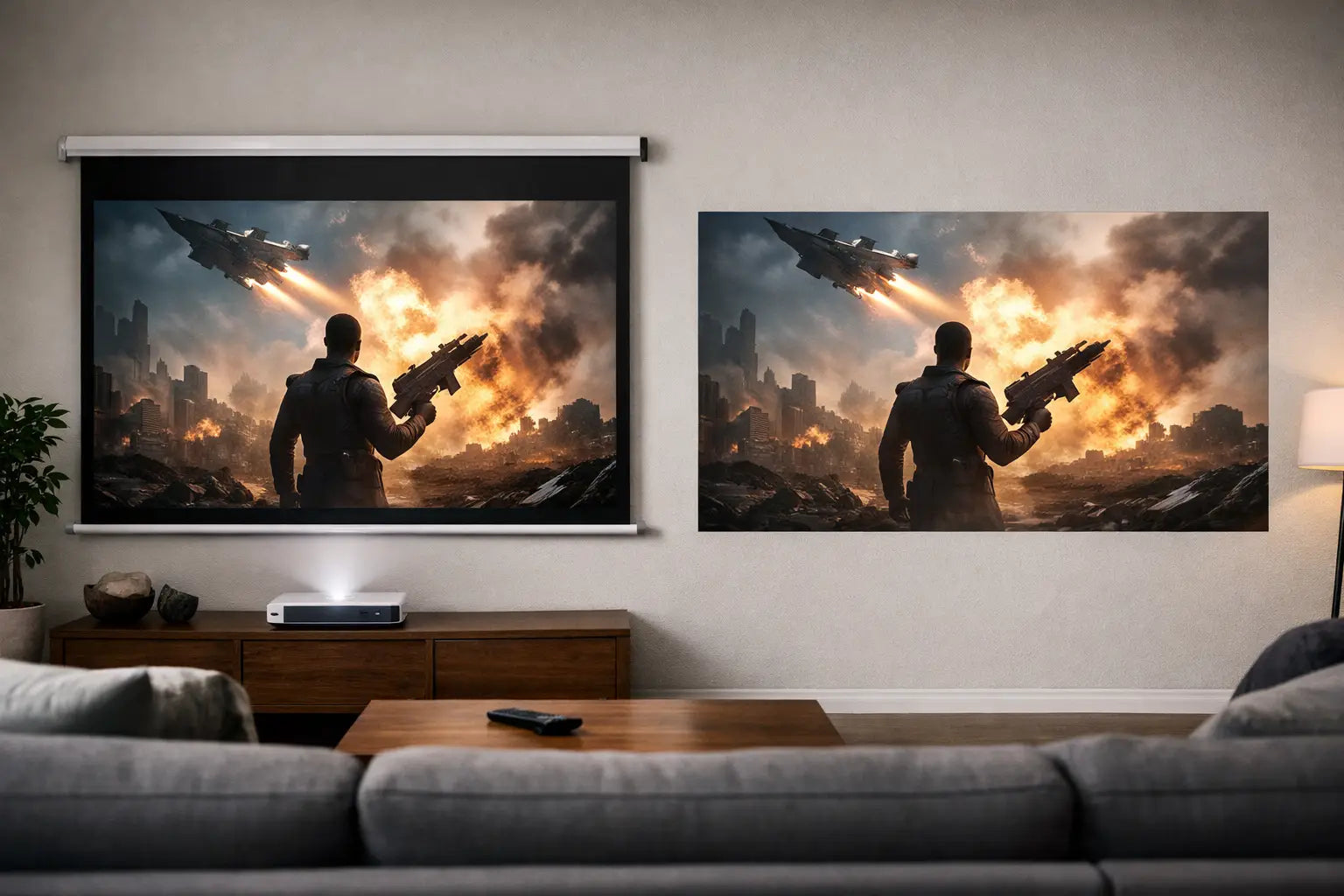
In these spaces, many buyers should lean toward higher-brightness models and consider screen material carefully. If the room cannot be fully darkened, a proper screen can help preserve image quality far better than projecting onto a plain wall.
Gaming rooms and multi-use spaces
Gamers often want big-screen impact with some ambient lighting still on. That means brightness and response time both matter. A dim projector can make fast games feel less vivid and harder to see, especially in shadow-heavy scenes.
If gaming is a major use case, avoid sizing brightness only for nighttime movie viewing. Build in some headroom so the projector still performs when the room is active and not fully blacked out.
Offices, classrooms, and worship spaces
These spaces usually prioritize visibility over cinematic subtlety. Presentations, lyrics, graphics, and text need to stay readable in brighter conditions, often on larger screens. That pushes brightness requirements up fast.
For these applications, higher lumen ratings are often essential, especially if lights stay on during use. Here, practicality beats romantic home theater logic. The image has to cut through the room.
Brightness is not the whole picture
A projector with more lumens is not automatically the better buy. This is where experienced buyers make better decisions than spec-sheet shoppers. Brightness has to be evaluated alongside contrast, color, lens quality, throw distance, and screen compatibility.
Some projectors advertise impressive brightness but look less refined in real viewing. Others deliver a more premium, balanced image because their optics, processing, and color handling are stronger. If you only chase the biggest lumen number, you can end up with a projector that looks bright but not beautiful.
There is also the issue of viewing fatigue. In a dark room, too much brightness on a smaller screen can feel intense rather than immersive. That is especially true for dedicated movie spaces where comfort and realism matter just as much as visual punch.
ANSI lumens vs marketing claims
Not all brightness numbers carry equal weight. ANSI lumens is the measurement most buyers should trust because it is standardized and more useful for comparison. Vague brightness language or inflated marketing specs can make lower-performance models appear more powerful than they really are.
If you are comparing projectors seriously, look beyond the headline number. Ask how the brightness is measured, what picture mode it applies to, and whether that output is realistic in normal use. A projector that only reaches its top number in an unusable image mode is not giving you real value.
Screen gain matters too
Your screen can either support projector brightness or work against it. Higher-gain screens can make an image appear brighter, while lower-gain or acoustically transparent screens may reduce perceived brightness. That does not make one better than the other - it just means the screen must match the projector and room.
This is why premium cinema design always considers the full chain. Projector, screen, room lighting, wall finishes, seating distance, and use habits all influence the final result.
A practical way to make the right choice
If you are trying to narrow your options, start with your room rather than the projector itself. If the room is dark and purpose-built for film, you can favor image quality and balance over raw output. If the room has windows, mixed use, or a larger screen, add brightness. If you need the projector for presentations or public-facing use, prioritize brightness aggressively.
Then pressure-test your expectations. Do you want occasional movie nights, or a true cinema-grade visual statement? Are you projecting at 100 inches, or are you planning a dramatic large-format screen wall? Do you want the cleanest blackout-room performance, or a projector that still looks impressive in a stylish living space at 4 p.m.?
That is the real answer to how to choose projector brightness. Do not buy lumens in isolation. Buy for the room, the screen, and the experience you actually want to live with.
A great projector should not merely turn on and throw an image. It should command the room, flatter the space, and make every movie night, match day, or presentation feel intentional. Choose brightness with that standard in mind, and the rest of your system will come together far more naturally.

Leave a comment
This site is protected by hCaptcha and the hCaptcha Privacy Policy and Terms of Service apply.