

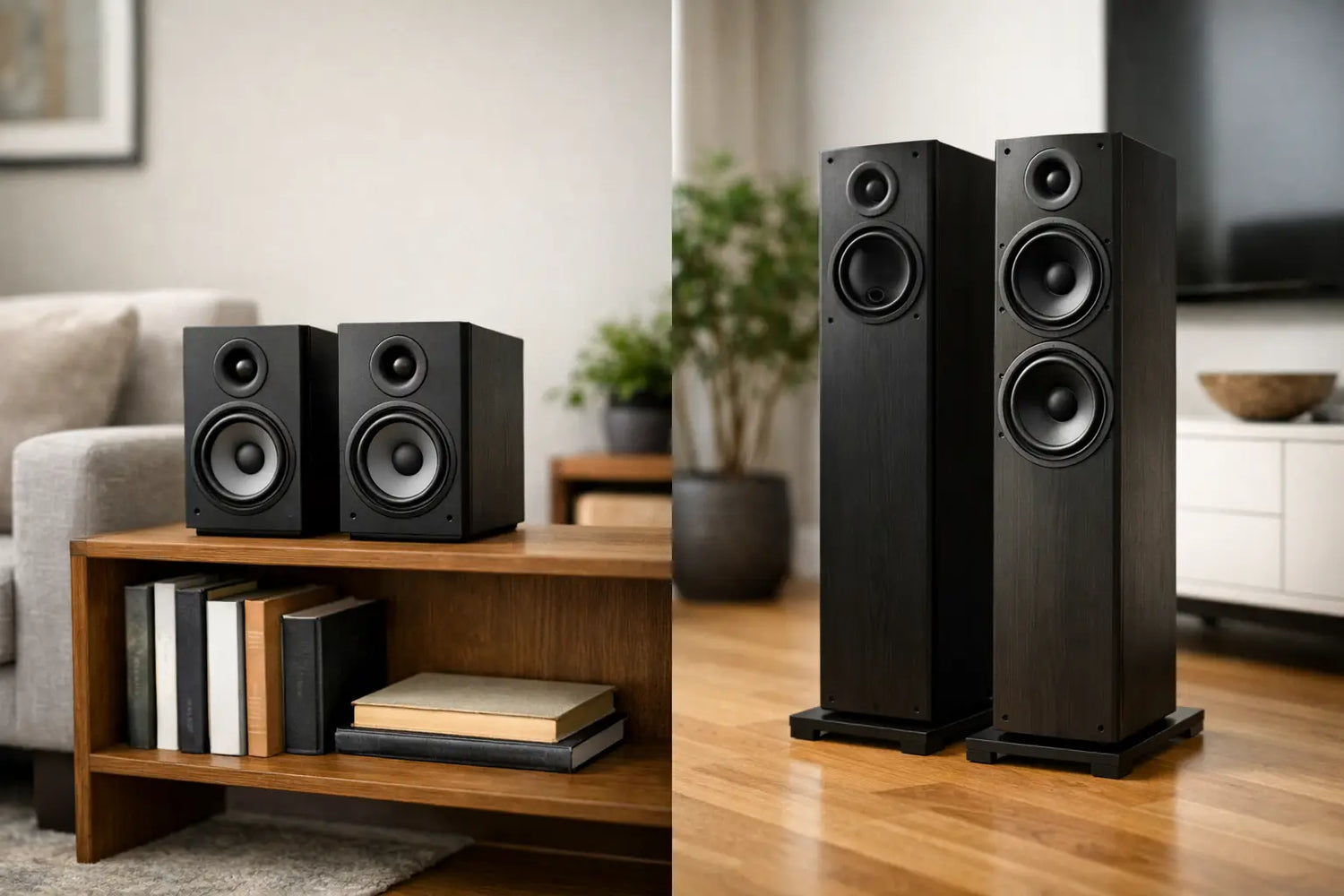
The wrong speaker choice usually shows up after the boxes are open. A system looks perfect in photos, then lands in your living room and suddenly the towers dominate the space, or the bookshelf pair sounds clean but leaves action scenes feeling a little thin. That is why the bookshelf vs floorstanding speakers question matters so much - not as a spec-sheet debate, but as a real decision about how you want your room to feel, sound, and perform every day.
For some buyers, the answer is obvious the moment they hear a full-size pair of towers fill a large room with scale and authority. For others, a refined bookshelf speaker on a proper stand delivers exactly the control, detail, and elegance they want without visually overpowering the space. Premium audio is not about buying the biggest cabinet you can afford. It is about building the right system for the room, the listening habits, and the level of impact you expect.
Bookshelf vs floorstanding speakers: the real difference
At a glance, the difference seems simple. Bookshelf speakers are smaller and meant to sit on stands, shelves, or furniture. Floorstanding speakers are larger, free-standing cabinets designed to deliver a fuller range from a single pair. In practice, the distinction runs deeper.
A floorstanding speaker usually has more cabinet volume, more drivers, and greater ability to move air. That often translates into deeper bass, higher output, and a bigger sense of scale. If you want music to feel expansive or you want movie soundtracks to carry real physical presence, towers have a natural advantage.
Bookshelf speakers take a different path. Their smaller size can make placement easier, and many high-quality models are exceptional at imaging, vocal clarity, and tonal balance. In a well-planned setup, especially one paired with a serious subwoofer, a bookshelf speaker can sound far more substantial than its dimensions suggest.
This is where many buyers get caught. They assume floorstanding speakers are always better because they are larger. Better is not the right word. More capable in certain conditions, yes. Better for every room, every aesthetic, and every budget, no.
Sound quality is not just about size
If your priority is pure scale, effortless dynamics, and low-end weight, floorstanding speakers usually win. They tend to project more authority at lower strain, especially in medium to large rooms. You hear it in orchestral passages, live recordings, and blockbuster film mixes where the sound needs room to breathe.
But speaker performance is not a straight line from small to large. A premium bookshelf speaker can outperform an average tower in refinement, detail retrieval, and stereo imaging. That matters if you spend your evenings with jazz, acoustic music, vocals, or carefully mixed stereo recordings. A compact cabinet often disappears more easily in the room, creating a focused, believable soundstage.
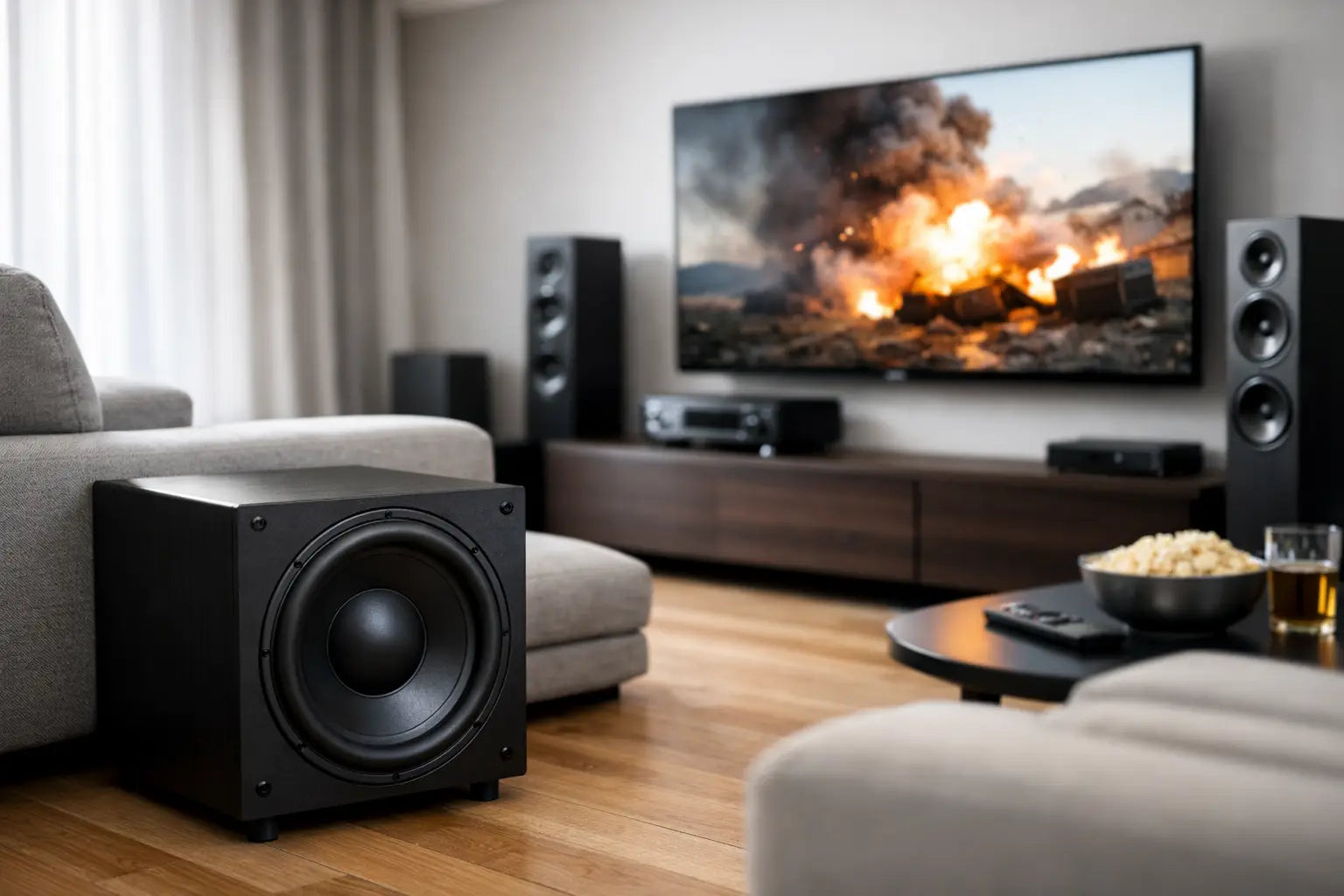
Bass is where the trade-off becomes most obvious. Floorstanding speakers usually produce more of it on their own. Bookshelf speakers often roll off earlier, which means you may want a subwoofer to reach the same sense of depth and drama. For music-only listeners in smaller spaces, that may not be a problem. For home theater buyers chasing impact, it usually matters a lot.
When bookshelf speakers make more sense
Bookshelf speakers are a smart choice when the room is modest in size, the décor matters, or the system is part of a cleaner, more flexible design plan. In an apartment, media wall, bedroom lounge, or stylish family room, a compact speaker can deliver premium sound without turning the room into a dedicated equipment display.
They also make sense if you are building in stages. A strong pair of bookshelf speakers can anchor a stereo setup today and later become part of a larger surround system. Add a subwoofer, center speaker, and surrounds over time, and you have a powerful upgrade path without replacing everything at once.
There is also a value argument here. In many product lines, the bookshelf model gives you much of the same sonic character as the matching tower at a lower price. That can free up budget for better amplification, acoustic treatment, a more capable subwoofer, or cleaner installation. In a well-balanced system, those upgrades often matter more than simply choosing the larger speaker.
The catch is placement. Bookshelf speakers thrown onto a random shelf or TV console rarely perform at their best. They need breathing room, stable support, and careful positioning. So while they look smaller, they do not always save as much space as people assume.
When floorstanding speakers are worth it
If you have a larger room and want the system to feel effortless, floorstanding speakers are hard to ignore. They are particularly compelling in open-plan living areas, dedicated listening rooms, and home theaters where cinematic scale is part of the goal. A quality tower does not just sound louder. It often sounds more relaxed and complete at everyday listening levels.
That matters for buyers investing in a premium result. Bigger cabinets can support larger woofers and more sophisticated driver arrangements, which helps create a fuller presentation from top to bottom. You may still want a subwoofer for theater-level low-end effects, but the towers will carry much more of the workload on their own.
Floorstanding speakers also bring a certain visual confidence. In the right room, they look intentional, architectural, and high-end. For homeowners designing a statement media space, that presence can be a benefit rather than a drawback.
The compromise is obvious. Towers take up more floor space, draw more attention, and can overwhelm smaller rooms both visually and acoustically. If your room is tight, reflective, or lightly furnished, bigger speakers may create bass issues that are difficult to control without treatment and careful setup.
Bookshelf vs floorstanding speakers for home theater
For home theater, the answer depends on whether you are building around impact, flexibility, or both. If your room is large and you want front speakers that deliver scale even before the subwoofer takes over, floorstanding speakers are a strong front-stage choice. They give action films more weight and often make the system feel more premium from the first scene.
If your theater space is moderate in size and you plan to include a capable subwoofer, bookshelf speakers can be outstanding for the left and right channels. This is especially true when the system is tuned properly and the crossover is handled well. In many real rooms, a bookshelf-plus-subwoofer combination gives you tighter bass management and more placement freedom than towers alone.
There is another practical point. In surround systems, consistency matters. Some buyers choose bookshelf speakers across multiple channels because it keeps voicing balanced and makes room integration easier. Others go with towers up front and bookshelf models for surrounds. Both approaches work when the system is designed as a whole rather than assembled piece by piece.
Room size, layout, and aesthetics matter more than people think
A speaker does not perform in isolation. It performs in your room, with your furniture, ceiling height, wall distance, and listening position. That is why room fit should lead the decision.
In a small room, a refined bookshelf speaker can sound open, precise, and beautifully controlled. A large tower in that same room may create bass buildup and a sense that the system is simply too much for the space. In a large room with high ceilings, the opposite can happen. A bookshelf speaker may sound polite, while a floorstander fills the space with ease.
Aesthetics deserve equal weight. Premium AV is part performance, part design. Some clients want discreet elegance. Others want the front stage to look as serious as it sounds. Neither preference is wrong. The best choice is the one that complements the room instead of fighting it.
Budget should cover the whole system
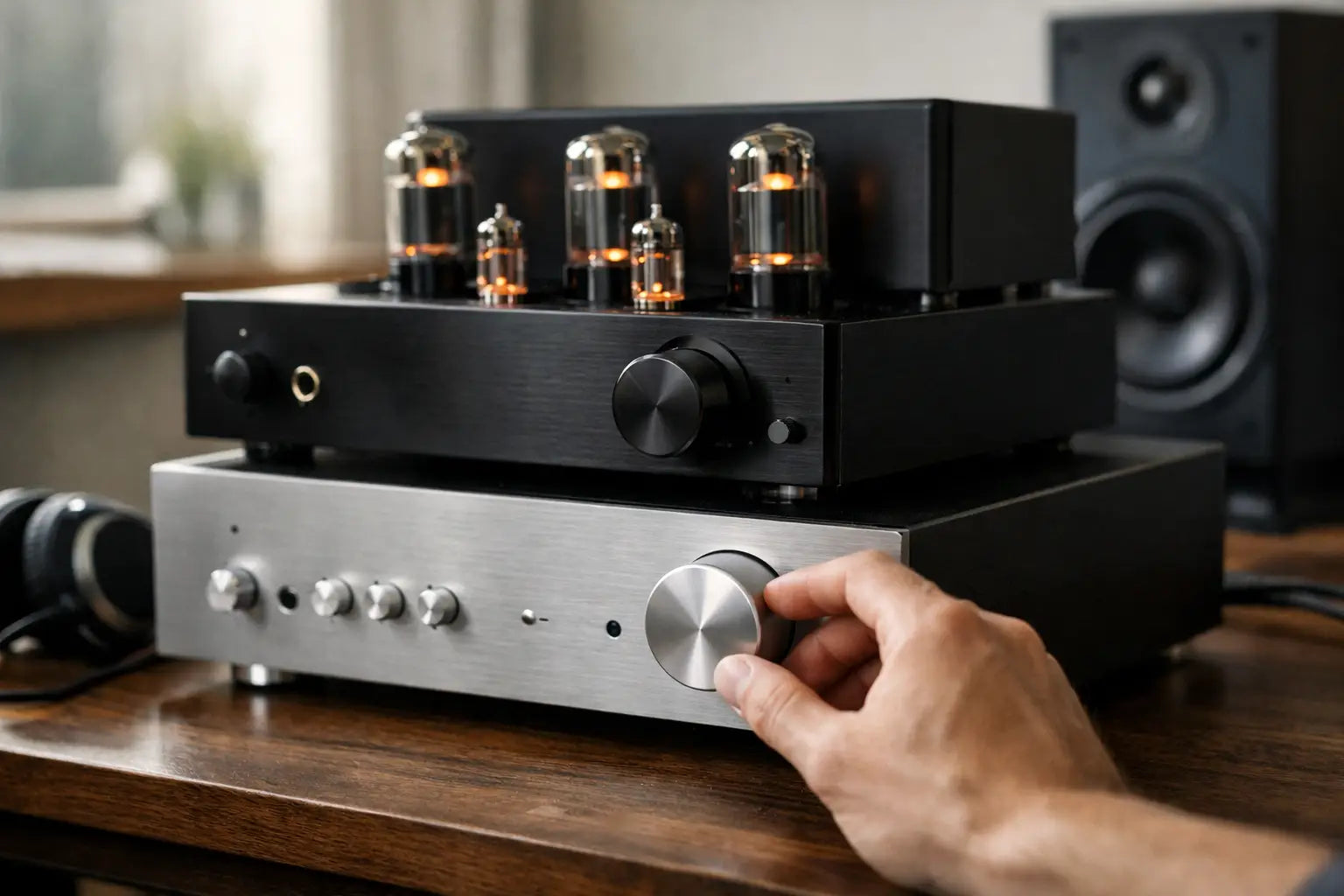
A common mistake is spending heavily on speakers and leaving too little for the rest. Amplification, source quality, subwoofer integration, room correction, acoustic treatment, and installation all shape the final result.
That is why bookshelf speakers can sometimes be the smarter premium move. If choosing a smaller speaker lets you step up to a better amp, add a subwoofer, or improve room acoustics, the finished experience may be far stronger. On the other hand, if your room is large and your budget comfortably supports proper amplification and placement, floorstanding speakers can deliver the kind of full-scale performance smaller cabinets simply cannot match.
At AmpliMart, this is where a system-first mindset matters. The goal is not to sell a box. The goal is to deliver a room that sounds intentional, looks elevated, and feels worthy of the investment.
So which one should you choose?
Choose bookshelf speakers if your room is smaller, your layout needs flexibility, or you want premium sound with a cleaner visual footprint. They are also ideal if you plan to pair them with a subwoofer or build the system in stages.
Choose floorstanding speakers if you want greater scale, deeper bass from the main speakers, and a more commanding presence in a medium to large room. They make the most sense when you have the space and budget to let them perform properly.
The best systems are not built around assumptions. They are built around the room, the lifestyle, and the kind of experience you want when the lights dim and the soundtrack starts. Buy for that moment, and the right speaker choice becomes much clearer.

اترك تعليقًا
This site is protected by hCaptcha and the hCaptcha Privacy Policy and Terms of Service apply.