

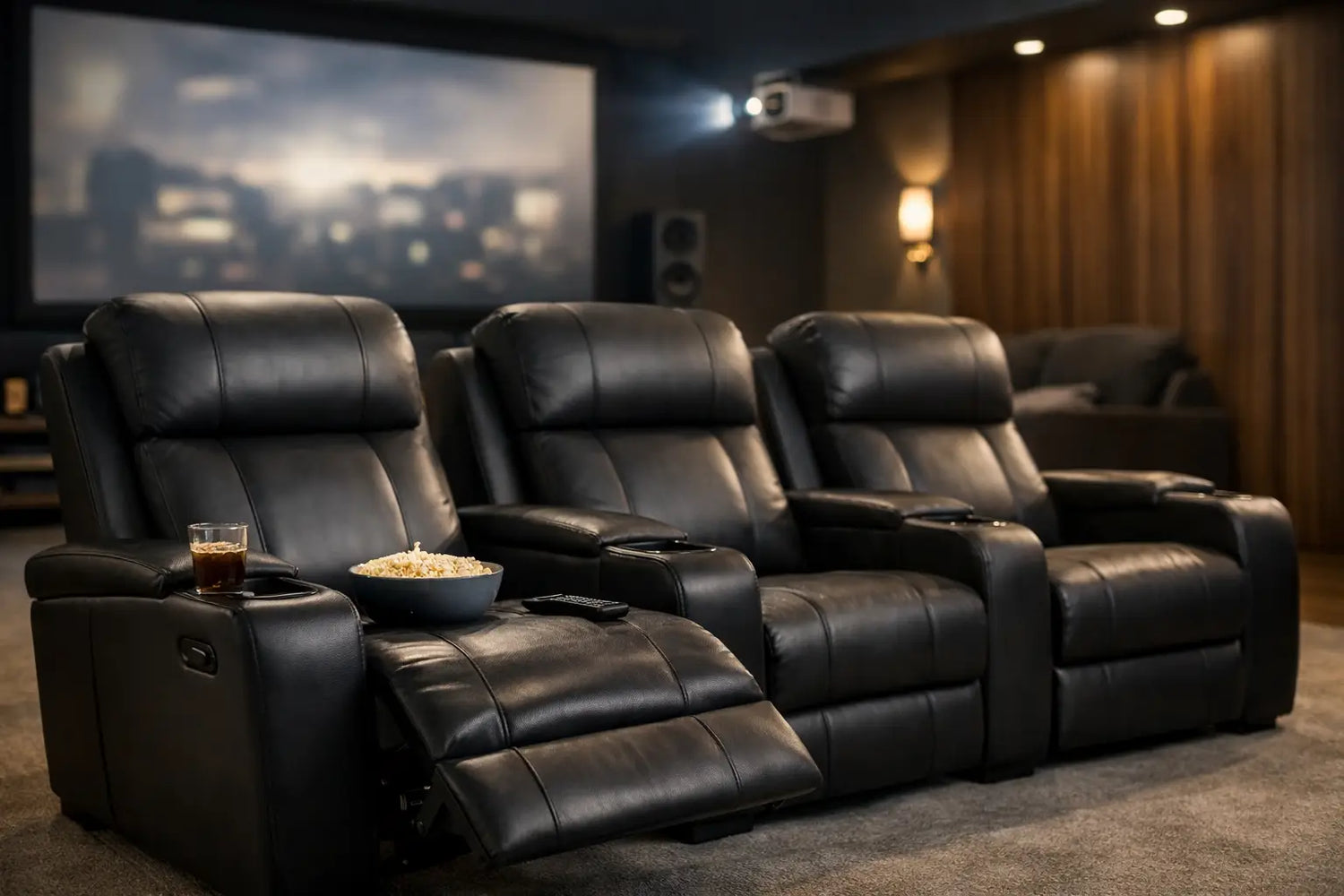
A great screen and a powerful surround system can impress for a few minutes. Bad seats ruin the room for years. That is why premium home theater seating is not a finishing touch. It is one of the core decisions that shapes comfort, sightlines, room flow, and how luxurious your cinema actually feels when the movie starts.
Most buyers already understand the value of a better projector, cleaner bass, or acoustic treatment. Seating deserves the same level of attention. If the cushions flatten too fast, the recline is awkward, the headrest blocks proper viewing, or the row spacing feels cramped, the room never reaches its full potential. A serious theater should feel intentional from the first step inside, and the seats do a lot of that heavy lifting.
What premium home theater seating really changes
The difference between ordinary recliners and premium home theater seating is easy to spot, but the bigger difference is in how the room functions over time. Premium seating is built for longer sessions, cleaner visual design, and a more tailored cinema layout. It supports the experience instead of just filling space.
Comfort is the obvious starting point. Better foam density, stronger frame construction, smoother reclining mechanisms, and more supportive back design matter when a two-hour movie turns into a six-hour binge session or a full weekend of sports. The seat should feel substantial, not soft for ten minutes and tired after thirty.
Then there is posture and viewing geometry. Home theater seating is not just living room furniture moved into a dark room. The angle of the backrest, the height of the headrest, and the relationship between the seat base and screen height all affect whether viewers can relax without constantly adjusting. In a properly designed theater, comfort and screen visibility work together.
Style matters too. In a premium room, seating becomes part of the architecture. Upholstery, arm profile, stitching, row arrangement, and lighting details all contribute to the cinematic atmosphere. If the room has high-end speakers, a projector, acoustic panels, and a beautiful screen wall, basic furniture will immediately look out of place.
How to choose premium home theater seating for your room
The best seat on paper can still be the wrong choice if it does not match the room. This is where many projects go sideways. Buyers focus on isolated features and forget the layout, the screen size, the riser plan, and the number of people the space needs to serve.
Start with the room dimensions, not the upholstery sample. Width, depth, and ceiling height determine whether you should use a single row, dual rows, or a combination of loungers and theater seats. In a compact media room, oversized recliners can eat up too much floor space and create poor walking clearance. In a larger dedicated theater, smaller seating can make the room feel underbuilt.
The next factor is viewing distance. A front row that sits too close to a large screen can cause neck strain, especially with a seat that reclines deeply. A back row without enough elevation can compromise sightlines, especially if the front row has tall backs or powered headrests. Premium seating works best when it is part of a full room plan, not a last-minute purchase.
Usage also matters. Some clients want a formal, dedicated cinema for movie nights. Others want a family-friendly entertainment room for gaming, streaming, and casual TV. Those are not the same seating jobs. A dedicated theater may benefit from structured rows and a more classic cinema silhouette. A flexible family space may need wider seats, more forgiving layouts, and convenience features that support everyday use.
Features worth paying for and features that depend
Not every premium feature adds equal value for every buyer. Some are worth prioritizing almost every time. Others depend on how you use the room.
Power recline is one of the upgrades that usually earns its place. It allows fine adjustment instead of forcing the body into one or two manual positions. Powered headrests can be equally valuable, especially in rooms with larger screens or viewers who prefer a more upright posture. Lumbar support is another feature that sounds minor until you spend an entire movie wishing you had it.
Cupholders, storage arms, USB charging, and ambient base lighting can all be useful, but their value depends on the room style. In a very polished, design-led theater, too many visible extras can make the seating look busy. In a family entertainment space, those same features can improve day-to-day convenience. There is no universal answer here. It depends on whether your priority is clean luxury, maximum practicality, or a balance of both.
Material choice deserves careful thought. Premium leather or high-grade performance upholstery can elevate the room and hold up better over time, but the best option depends on climate, maintenance expectations, and usage intensity. Leather often delivers the richer luxury impression. Performance fabrics can offer excellent durability and a warmer feel. The wrong choice is usually the one made purely on appearance without considering real use.
Layout decisions that make or break the experience
A theater seat can be exceptional and still feel disappointing if the room layout is poorly planned. This is where premium projects separate themselves from simple product purchases.
Row spacing is one of the biggest factors. People need enough legroom to enter and exit comfortably without making the room feel stretched and inefficient. Reclining seats need extra depth when fully extended, and that has to be considered before risers, rear walkways, or second-row bars are finalized.
Center alignment matters too. Ideally, the main viewing seats should relate properly to the screen and speaker layout, not just fit neatly against the wall. A room that looks symmetrical but places the best seats slightly off-center can compromise the very experience it was built to deliver.
If you are planning multiple rows, riser height needs real attention. Too low, and the second row loses the visual advantage it was supposed to have. Too high, and the room can feel crowded or awkward. Sightline planning is not glamorous, but it is one of the smartest investments in the whole project.
Why premium seating should match the rest of the system
The best home theaters feel unified. The seating, screen wall, lighting, acoustics, and equipment all speak the same design language. That is why premium home theater seating should not be chosen as a standalone furniture decision.
For example, if your room is built around dark acoustic wall treatments, a large projection screen, and refined architectural lighting, the seating should reinforce that high-end cinema look. If your room is a multipurpose media lounge with open-plan design cues, the seating can be more relaxed and contemporary. The right answer is not only about comfort. It is about consistency.
There is also a practical side to this. Larger seats can affect subwoofer placement, surround speaker positioning, and walkway clearance. Seat-back height can influence rear speaker performance in some layouts. Even the visual bulk of the seating can impact how spacious or intimate the room feels. In a serious theater, nothing exists in isolation.
This is where a specialist approach has real value. A retailer that understands complete cinema rooms can help you avoid the common mismatch of buying impressive equipment and average seating, or buying oversized seating that limits the room’s acoustic and visual performance. At AmpliMart, that full-room thinking is exactly what turns a good shopping list into a finished cinema environment.
The real value of buying better once
Cheap seating often looks acceptable on day one. The problem shows up later. Padding softens unevenly. Mechanisms get noisy. Finishes wear too quickly. The room loses that premium feel faster than expected. In a high-value home theater, replacing poor seating is not a small correction. It is an expensive and frustrating reset.
Premium seating asks for a bigger upfront investment, but it usually protects the room better over the long term. Better construction, better materials, and better ergonomic design tend to age more gracefully. Just as important, they preserve the feeling that the room was built with purpose.
That feeling matters. Home theater is not just about watching content. It is about creating a space people want to return to. A place that feels elevated, comfortable, and complete. When the lights dim and the sound opens up, your seating should feel like it belongs in that moment.
If you are building a room worth showing off, do not treat the seats like an accessory. Choose premium home theater seating the same way you would choose your projector, speakers, or screen - with standards. Your theater will feel better, look better, and stay impressive long after the novelty of the first movie night wears off.
The right seat does more than support your body. It gives the whole room its authority.


Leave a comment
This site is protected by hCaptcha and the hCaptcha Privacy Policy and Terms of Service apply.