

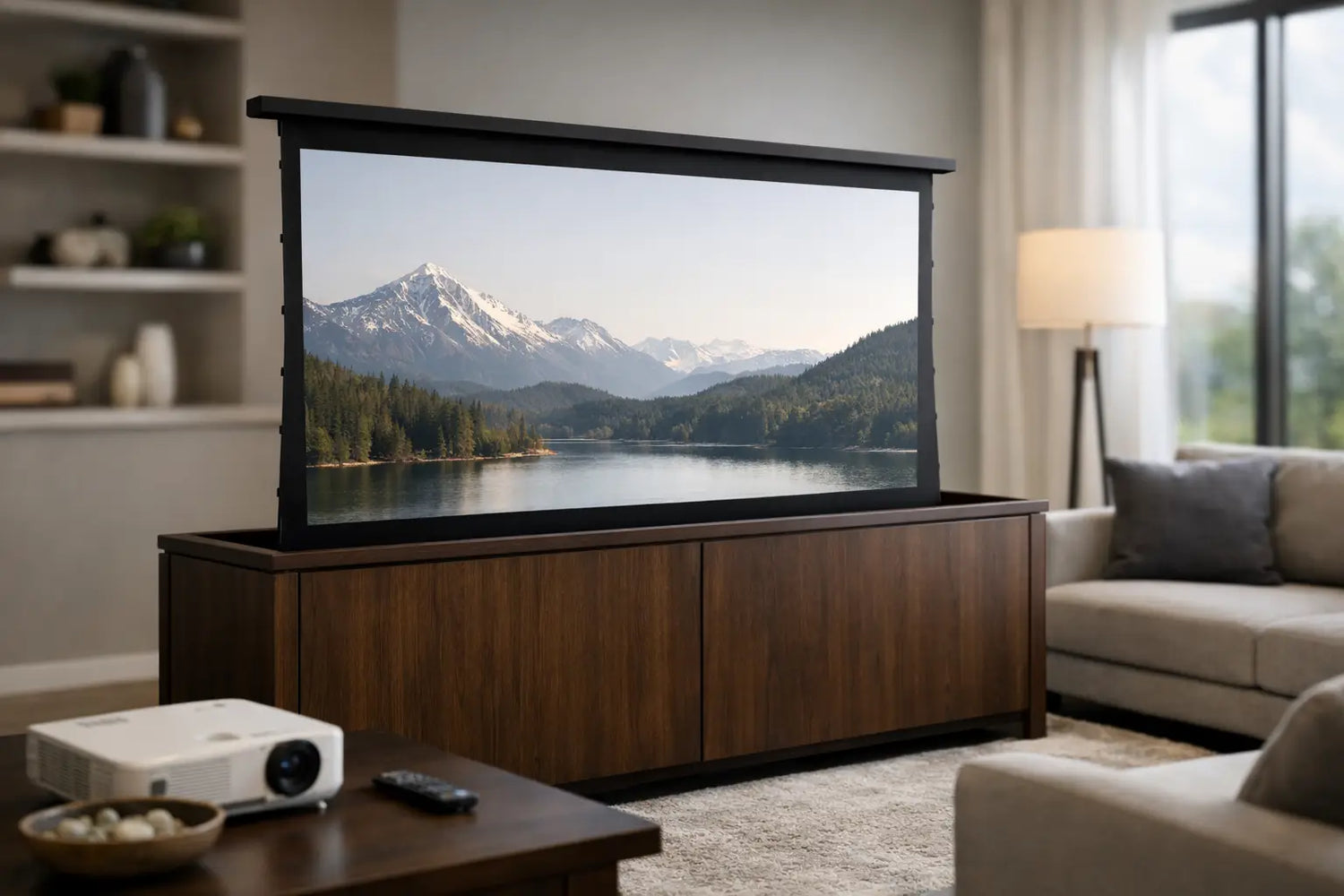
A beautiful media room can be ruined by one visible detail - the screen housing. If you want the cinematic scale of projection without leaving a bulky case on display, a motorized projector screen cabinet solves the problem cleanly. It gives you the big-screen experience when you want it and a refined, uncluttered room when you do not.
For design-conscious homeowners, that matters. A projector setup should not feel like an afterthought, especially in a villa lounge, formal sitting room, or multipurpose family space where every finish is intentional. The right cabinet turns a projection screen into part of the architecture instead of a compromise hanging on the wall.
What Is a Motorized Projector Screen Cabinet?
A motorized projector screen cabinet is a housing system that conceals a retractable projection screen inside a cabinet, often positioned at floor level, against a wall, or integrated into furniture. When activated, the screen rises or drops into place with the push of a button, then disappears back into the cabinet when viewing is over.
That simple motion changes the feel of the room. You keep the drama of a large-format image without making the screen permanent in the visual layout. In premium interiors, that is often the deciding factor between a projector-based room and a standard flat-panel setup.
Some cabinets are freestanding. Others are built into custom joinery, low-profile entertainment units, or purpose-made home cinema furniture. The best choice depends on the room, screen size, projector position, and how permanent you want the installation to be.
Why Homeowners Choose a Motorized Projector Screen Cabinet
The biggest appeal is concealment, but that is only the start. In upscale homes, people are not just buying display equipment. They are buying a finished outcome - clean lines, easier room planning, and a viewing setup that feels high-end from every angle.
A visible screen case can compete with artwork, millwork, lighting design, or a carefully styled front wall. A cabinet keeps that area controlled. When the screen is stored, the room returns to its intended identity, whether that is a formal lounge, a family entertainment zone, or a dedicated cinema with a more polished finish.
There is also a practical benefit. Housing the screen inside a cabinet helps protect it from dust, accidental contact, and general wear. That is useful in homes with children, pets, or busy multifunction spaces. If the room serves as both an everyday living area and an evening theater, hidden hardware simply holds up better over time.
Then there is perceived quality. A motorized movement paired with concealed installation feels more premium than a manual pull-down screen or exposed roller. For buyers investing in better sound, refined seating, acoustic treatment, and full-room transformation, the screen should match that standard.
Where a Screen Cabinet Works Best
Not every room needs one, but certain spaces benefit immediately. Open-plan living rooms are a strong fit because they need flexibility. During the day, the room looks elegant and social. At night, it becomes a cinema. A cabinet supports both uses without forcing one identity all the time.
It also works well in front of large windows where wall-mounted options are limited, or in rooms where a TV is present and the projector screen needs to appear only for movie nights and sports viewing. In these cases, the screen can rise from a low cabinet in front of the wall or window line, then disappear when the room returns to daily use.
Dedicated home theaters can also benefit, especially when the goal is a custom, furniture-integrated front stage. Some homeowners want every component hidden until the room is active. Others prefer a minimalist theater design where the screen vanishes and the room can be used for music listening, entertaining, or presentations.
Choosing the Right Cabinet Size and Screen Format
This is where style and performance meet. The cabinet must fit the screen, but the screen must also fit the room. Going larger is not always better if seating distance, wall width, and projector brightness are working against you.
Start with screen size in relation to where people will sit. A large image is exciting, but if the first row is too close, it can become tiring. If the room is bright and you are not fully controlling ambient light, an oversized screen may also reduce perceived contrast.
Aspect ratio matters too. Many homeowners instinctively choose 16:9 because it suits streaming, gaming, and general TV content. That is usually the safest option for mixed use. For movie-first rooms, a wider cinema ratio may be more dramatic, but it introduces more planning around content format and masking expectations.
The cabinet itself needs enough depth and width to house the motorized assembly properly. This is why off-the-shelf furniture rarely delivers the same result as a purpose-built cabinet package. Precision matters. If dimensions are tight, operation can become noisy, unstable, or visually awkward.
The Design Details That Separate Average From Premium
A good cabinet hides a screen. A great one feels like it was always meant to be in the room.
Material finish plays a big role. High-gloss surfaces may suit modern interiors, while matte lacquer, wood veneer, or stone-look finishes may work better in warmer spaces. The cabinet should relate to the room's joinery, flooring, and front-wall palette rather than standing apart like a piece of AV equipment.
Mechanism quality is just as important. A premium setup should rise smoothly, hold tension properly, and stop consistently. Cheap motors and weak housings tend to show themselves quickly through vibration, uneven screen drop, or distracting operational noise. In a luxury room, those small flaws feel much bigger.
Cable management is another detail that gets overlooked. The cleanest cabinet installations account for power, trigger wiring, control systems, and projector coordination from the beginning. If cords are visible or access panels look improvised, the premium effect disappears fast.
Installation Matters More Than Most Buyers Expect
This is not a product category where you want to improvise after delivery. A motorized projector screen cabinet sits at the intersection of furniture, electrical planning, projection geometry, and room design. If one part is off, the entire experience suffers.
Screen height has to align with comfortable sightlines. The projector throw distance must match the final image size. Cabinet placement has to respect walking paths, speaker positioning, and front-stage aesthetics. In some rooms, even the floor level and rug thickness can affect how naturally the screen presents itself.
That is why many buyers prefer a solution-led approach instead of shopping the screen in isolation. When the screen cabinet, projector, speakers, and room layout are considered together, the result feels intentional. That is the difference between owning quality gear and having a room that truly performs.
Is a Motorized Projector Screen Cabinet Worth It?
If your priority is the lowest upfront cost, probably not. A basic wall-mounted screen will always be more affordable. But for homeowners building a premium entertainment space, value is not just about the screen surface. It is about preserving the room, elevating daily use, and avoiding the visual clutter that makes expensive systems look ordinary.
It is especially worth it when the room has multiple roles, when interior design is a serious priority, or when you are already investing in a higher-tier projector and sound system. In those cases, the cabinet is not an add-on. It is part of what makes the whole system feel complete.
The trade-off is planning. You need accurate measurements, the right cabinet style, and a realistic view of how the room will be used. But when those pieces are aligned, the payoff is hard to ignore. You get scale, concealment, and a cinematic reveal that flat panels simply cannot replicate.
Buying With the End Result in Mind
The smartest buyers do not start with a screen spec sheet. They start with the room they want to walk into. Do you want a lounge that transforms for movie night? A formal entertainment space that keeps technology out of sight? A media room that looks custom from the first glance? Your answer should shape the cabinet choice.
That is where a specialist retailer has a clear advantage. A brand like AmpliMart does more than list products. It helps connect the cabinet, projection system, audio performance, and room finish into one high-impact result. That approach saves time, avoids mismatched components, and leads to a setup that looks as expensive as it sounds.
A motorized projector screen cabinet is not just about hiding a screen. It is about giving your room permission to be elegant first and spectacular on command.


Leave a comment
This site is protected by hCaptcha and the hCaptcha Privacy Policy and Terms of Service apply.