

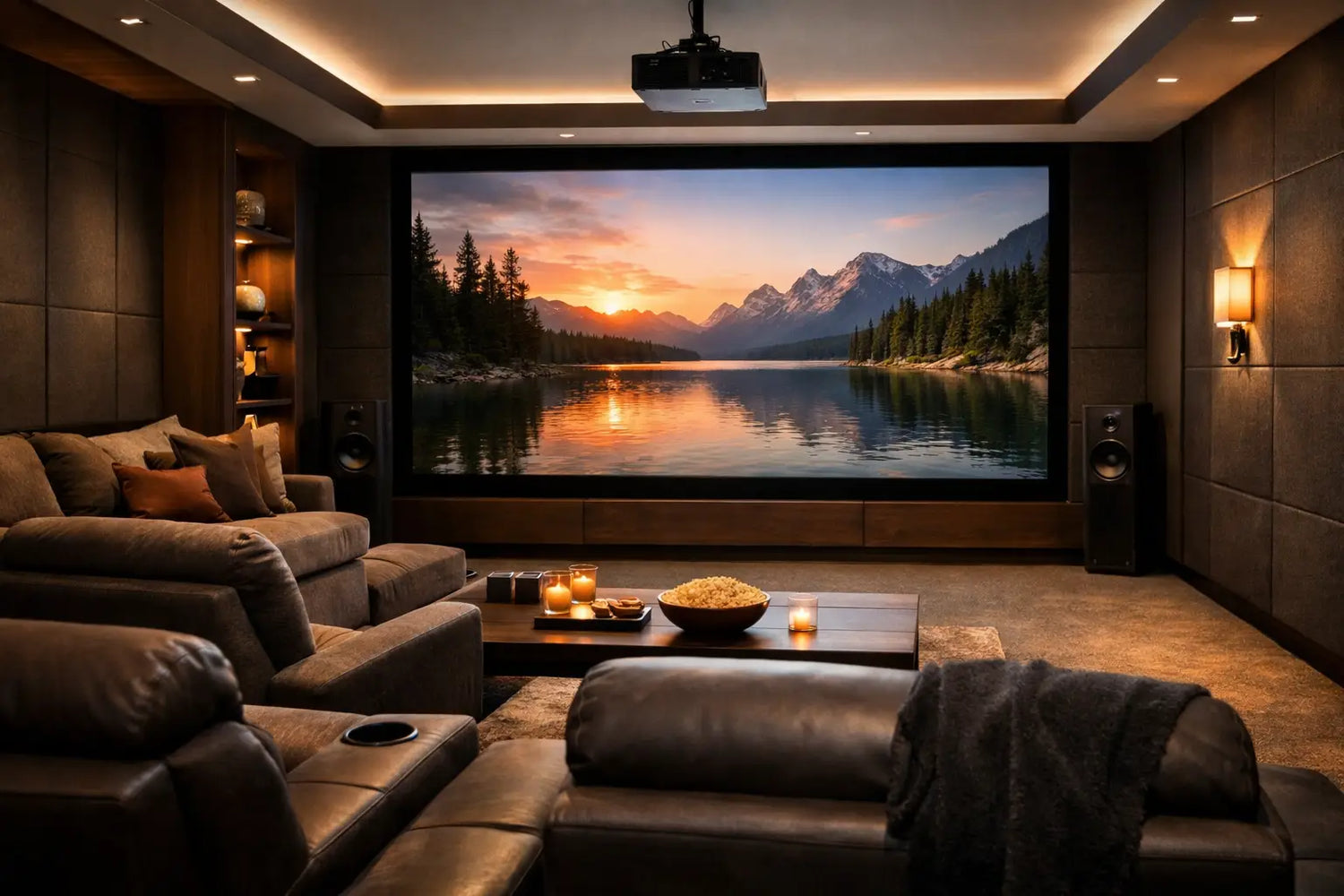
The difference between a room that plays movies and a room that feels cinematic usually comes down to design choices you notice the second the lights go down. The best home cinema room design ideas do more than make a space look expensive. They control sound, shape sightlines, hide distractions, and turn every movie night into an event.
For homeowners investing in a premium entertainment space, that distinction matters. A larger screen alone will not fix poor speaker placement. Recliners will not make up for a bright room with hard echoes. And even top-tier equipment can underperform if the room around it was treated like an afterthought. Great cinema rooms are built as complete environments, where comfort, acoustics, lighting, and technology work together.
Start with the room, not the gear
One of the smartest home cinema room design ideas is also the one people skip most often: choose the right room before you choose the products. A dedicated enclosed room will almost always outperform an open-plan living space because it gives you better control over sound isolation, light, and speaker positioning.
If you have a basement, bonus room, or spare enclosed area, you already have an advantage. Rooms with fewer windows are easier to darken and easier to tune acoustically. If your only option is a multi-use family room, the design approach needs to be more flexible. In that case, motorized screens, hidden speakers, and layered lighting become more important because the room has to work hard in two modes.
Room proportions matter too. A long rectangular room is often easier to design than a perfect square, which can create more noticeable bass issues. Ceiling height also affects immersion. Higher ceilings can feel luxurious, but they may require more thoughtful acoustic treatment to keep the sound tight and controlled.
Build the layout around the screen experience
In a true cinema room, the screen is the visual anchor. That sounds obvious, but many layouts still put furniture placement or decorative features ahead of viewing geometry. The better move is to establish the screen wall first, then organize the rest of the room around it.
Projection remains the gold standard for a dedicated theater feel, especially when paired with a properly sized fixed or motorized screen. A very large flat panel can look stunning, but if your goal is cinematic scale, projection usually delivers the bigger emotional impact.
Screen size should match viewing distance, not ego. Go too small and the room feels underwhelming. Go too large and image flaws become more visible while eye fatigue increases. The sweet spot depends on projector performance, content type, and seating distance. In premium rooms, the best result is usually a balanced screen size that fills your field of view without overwhelming the front row.
Give the front wall a finished, custom look
A plain wall with a mounted screen can work, but a more polished approach gives the room instant authority. Wall paneling, fabric systems, recessed lighting details, or a purpose-built media wall can make the screen area feel intentional and architectural.
This is also where hidden performance upgrades can live. Acoustic treatments, in-wall speakers, and cable management are much easier to integrate when the front wall is designed as part of the installation, not decorated after the fact.
Treat acoustics like a design feature
If there is one area where premium cinema rooms separate themselves from average setups, it is acoustics. Good sound is not only about buying better speakers. It is about giving those speakers a room that lets them perform.
Hard floors, bare walls, large windows, and reflective ceilings can make even excellent systems sound harsh, smeared, or boomy. Acoustic panels, bass control, upholstered seating, rugs, and wall treatments all help shape a more focused and immersive presentation. The goal is not a dead room. The goal is a controlled room where dialogue is clear, effects feel precise, and bass has weight without turning muddy.
One of the best home cinema room design ideas for design-conscious homeowners is to use acoustic treatment that blends into the interior style. Fabric-wrapped panels, slatted wood features, and custom-finished wall sections can improve performance while still looking elegant. The room should feel luxurious, not technical.
Sound isolation changes the value of the room
Acoustic treatment improves what you hear inside the room. Sound isolation helps control what escapes outside it. That difference matters when the cinema is close to bedrooms, living spaces, or neighboring walls.
A room with proper insulation, sealed gaps, and better door construction lets you enjoy real impact without turning the volume into a household problem. It also makes late-night viewing much more realistic. For clients building a serious entertainment room, sound isolation is often one of the highest-value upgrades because it protects the experience every time the system is used.
Choose seating that fits the room, not just the catalog
Luxury cinema seating looks impressive, but the right seating plan depends on how the room will actually be used. A couple who wants a private screening lounge may prefer one generous row with wide recliners and side tables. A family that hosts frequently may need two rows or a sectional plus a rear riser.
Sightlines are the real test. Every seat should have a comfortable view of the full screen without awkward neck angles. If you are using multiple rows, a riser is usually necessary. Without it, the second row often feels like an expensive compromise.
Comfort features matter, but restraint matters too. Oversized seating can quickly consume a room and leave too little space for speaker placement or walking access. Premium design is not about filling every inch. It is about proportion.
Use lighting to create mood and control distractions
Bad lighting ruins expensive rooms. A cinema space needs layered lighting that supports both function and atmosphere. That usually means combining low-level ambient lighting, aisle or step lighting, task lighting near seating if needed, and complete blackout control for viewing.
Dimmable sconces, recessed perimeter lighting, and soft LED accents can make the room feel dramatic before the movie even starts. But lighting should never spill onto the screen or reflect heavily off glossy surfaces. The most elegant setups feel subtle, almost invisible once the content begins.
Window treatment is part of lighting design too. In rooms with natural light, blackout curtains or motorized shades are not optional if you want daytime performance from a projector. You can have a beautiful room or a cinematic room. With the right planning, you can have both.
Keep the equipment clean, hidden, and easy to use
A premium cinema should not feel cluttered with exposed wires, stacked boxes, and too many remotes. One of the strongest design moves is to make the system disappear until it is needed.
That can mean built-in cabinetry, rack organization, concealed wiring, in-wall or in-ceiling speakers where appropriate, and a control system that simplifies operation. Press one button and the lights dim, the screen drops, the projector turns on, and the audio system switches to the right source. That kind of polish changes how the room feels because it removes friction.
This is where specialist planning pays off. Component compatibility, ventilation, cable routing, and future upgrade paths are easy to underestimate. The room may look finished, but behind that finish there should be a smart technical backbone.
Make the room feel cinematic without turning it into a theme park
There is a fine line between atmosphere and gimmick. Bold interiors can look fantastic, but the room should still feel timeless enough to enjoy for years. Rich dark colors, textured wall finishes, tailored paneling, and premium upholstery usually age better than novelty décor.
If you want visual drama, focus on material quality. Deep charcoal walls, walnut details, plush carpeting, matte finishes, and subtle metallic accents create a high-end cinema mood without making the room feel overdesigned. Posters, signage, or themed accessories can still work, but they are strongest when used selectively.
Small rooms can still feel premium
Not every client has space for a grand private theater, and that is fine. Smaller cinema rooms can be incredibly effective when every element is intentional. In fact, compact rooms often deliver excellent immersion because viewers sit closer, the sound field is easier to control, and the space feels focused.
The key is avoiding oversized furniture and mismatched equipment. A properly specified projector, a correctly sized screen, and a well-tuned speaker package can outperform a larger but poorly planned room every time.
Plan for the way you actually watch
Some homeowners want a room built for blockbuster sound and dark-room projection. Others care just as much about streaming series, sports, or gaming. Those priorities should influence the design.
A sports-focused room may benefit from a little more ambient lighting and flexible seating. A gaming-first setup may need low input lag, strong surround placement, and easy console access. A film-purist room may lean harder into blackout control, acoustic tuning, and a projector-screen combination designed for true cinematic presentation.
This is why off-the-shelf thinking falls short. The best cinema rooms are not assembled. They are tailored. That is the difference between owning premium equipment and living with a premium experience.
For homeowners ready to create something more refined than a basic media room, the smartest move is to treat design and performance as one project from day one. When the screen, sound, seating, lighting, and finishes are planned together, the room stops feeling like a spare space with gadgets and starts feeling like the best seat in the house. AmpliMart was built for exactly that kind of transformation.


Leave a comment
This site is protected by hCaptcha and the hCaptcha Privacy Policy and Terms of Service apply.