

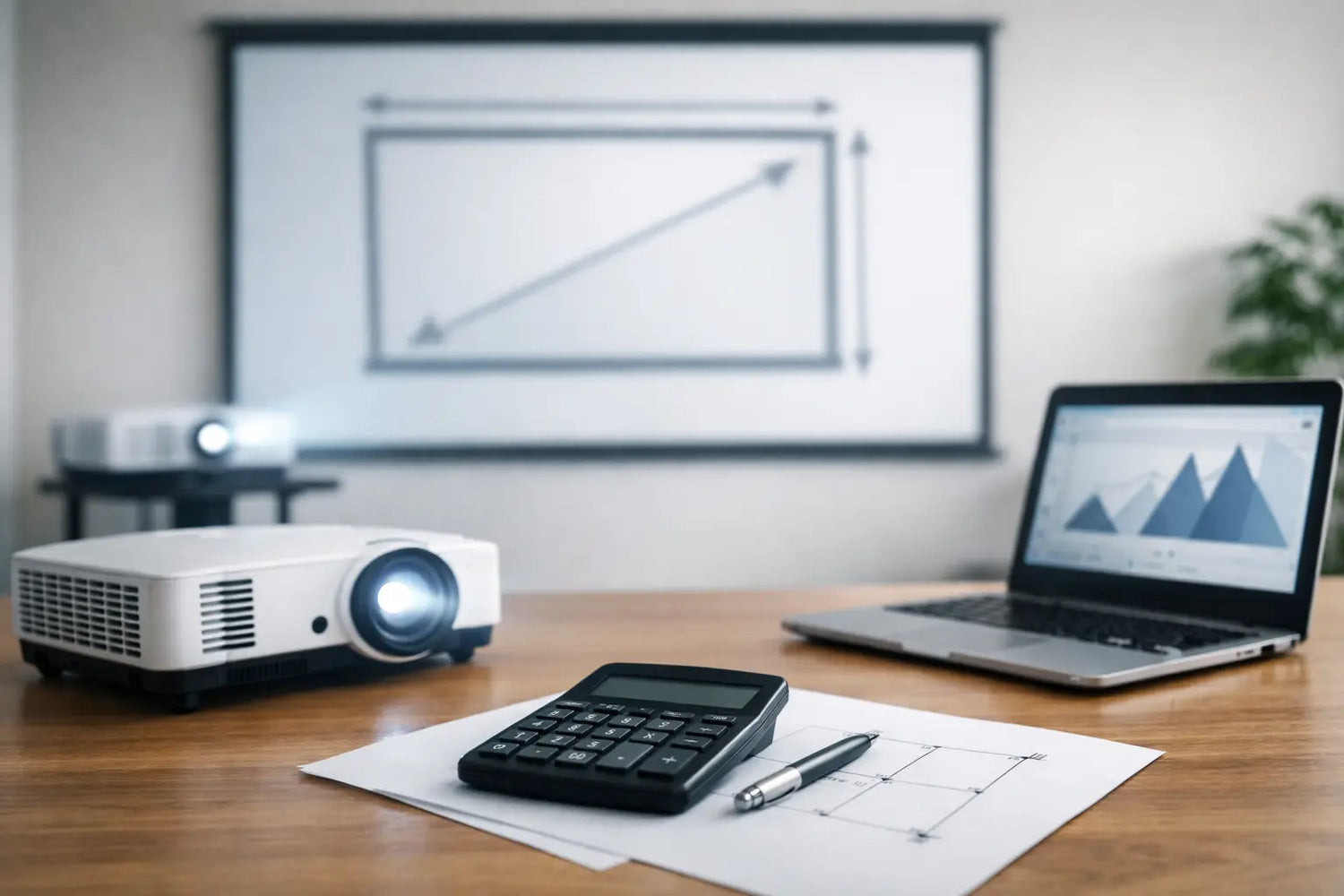
A projector that looks incredible in a showroom can feel completely wrong once it lands in your room. The screen is too large, seating is too close, brightness falls off, or the image never quite feels cinematic. That is exactly why a projector screen size calculator matters. It takes the guesswork out of screen selection and helps you build a viewing experience that looks intentional, balanced, and worth the investment.
For premium home cinema buyers, screen size is not a vanity metric. It affects immersion, image quality, comfort, room layout, and even which projector category makes sense. If you are building a serious media room, upgrading a family living space, or planning a polished installation in a villa or entertainment lounge, getting the screen size right early saves money and avoids expensive compromises later.
What a projector screen size calculator actually does
A projector screen size calculator helps estimate the ideal screen dimensions based on a few key inputs, usually throw distance, aspect ratio, room depth, and seating position. Some calculators start with projector specs. Others start with your room. The best ones help you connect all the moving parts instead of treating the screen as a standalone purchase.
At a basic level, the calculator tells you how large the image can be from a given projector distance. More advanced versions also help you judge whether that size is practical based on viewer comfort and room conditions. That distinction matters. A screen that technically fits may still be too aggressive for long movie sessions or too dim for mixed lighting.
This is where many buyers go wrong. They chase the biggest possible image because larger sounds better on paper. In real-world use, the right screen size is the one that fits the room, the projector, and the way you actually watch.
Start with the room, not the product
A premium cinema setup should feel designed, not forced. Before you get excited about screen inches, look at your room with a clear eye. Ceiling height, wall width, seating depth, ambient light, and speaker placement all shape what screen size makes sense.
If the screen dominates the front wall and leaves no space for speakers, acoustic treatment, or clean trim work, it is probably too large. If the front row needs to tilt upward or scan side to side to follow the image, it is probably too large. If the room has more ambient light than a dedicated theater, an oversized screen may also reduce perceived contrast and punch.
A projector screen size calculator is useful because it brings discipline to these decisions. It helps turn a wish list into dimensions you can actually install and enjoy.
How viewing distance changes the answer
Viewing distance is one of the biggest factors in screen selection, and it deserves more attention than it usually gets. A massive screen can look spectacular from the right seat, but exhausting from the wrong one.
For movie-first setups, many people prefer a more immersive field of view. For sports, TV, and casual mixed use, a slightly more relaxed screen size often feels better. Families also tend to have varied seating positions, which means the ideal screen for one chair may not be ideal for the whole room.
That is why a projector screen size calculator should never be used as a one-number answer machine. It is better to treat it as a range finder. If the calculator says your room can support a 120-inch image, that does not automatically mean 120 inches is your best choice. In many rooms, 100 to 110 inches may deliver a more refined result, especially when comfort, brightness, and speaker integration are considered together.
Throw distance and projector compatibility
This is where technical planning starts to pay off. Every projector has a throw ratio that determines how large an image it can create from a given distance. A calculator uses that relationship to estimate image size, and this prevents one of the most common installation mistakes - pairing a projector with a room it cannot properly serve.
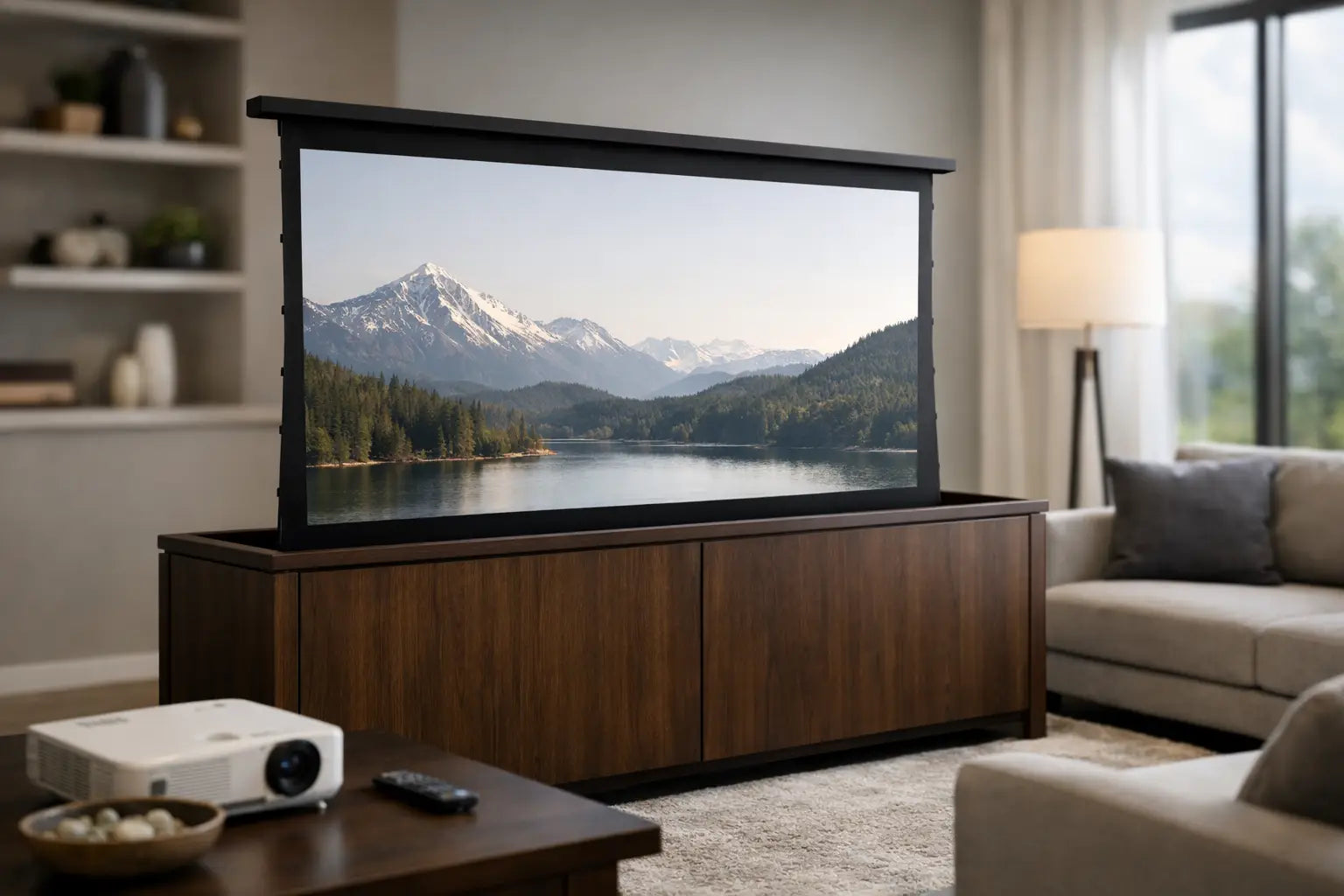
Standard throw projectors usually need more depth. Short throw and ultra short throw models can produce large images from much closer positions, which is useful in living rooms and design-led spaces where ceiling mounts are less desirable. But those categories come with trade-offs. Ultra short throw models demand precise screen compatibility and placement, while standard throw projectors often offer more flexibility in dedicated cinema rooms.
If you are choosing the room and the projector at the same time, the calculator becomes even more valuable. It helps you avoid building your layout around assumptions that the hardware cannot support.
Why aspect ratio matters more than most buyers expect
Not all 120-inch screens are the same. Aspect ratio changes the actual width and height of the image, which affects wall fit, viewing style, and content presentation.
For most home cinema and entertainment setups, 16:9 is the practical default. It works well for streaming, gaming, sports, and general TV use. A 2.35:1 or 2.40:1 screen can feel more luxurious for movie-first rooms, but it introduces more complexity. You may get black bars on some content, and the room needs to support a wider visual emphasis.
A projector screen size calculator that includes aspect ratio is far more useful than one that gives only diagonal size. Diagonal numbers are easy to market, but width and height are what matter when you are fitting a screen between speakers, cabinetry, wall details, or acoustic panels.
Bigger is not always better
Luxury is not about excess. It is about control. A well-sized 110-inch screen with strong brightness, proper masking, and balanced seating will feel far more premium than a 140-inch screen that washes out, overwhelms the room, or exposes every setup flaw.
Large screens demand more from the projector. Brightness has to stretch farther across the image. Black levels can feel less convincing if the room has reflective surfaces. Fine content can look softer if source quality is inconsistent. The room itself starts to matter more, which means wall color, acoustic treatment, light control, and screen material all become part of the equation.
That does not mean large screens are a bad idea. It means they should be chosen with intention. If your room is light controlled, your projector has serious output, and your seating distance supports it, a bigger screen can be extraordinary. If not, a more disciplined size often delivers the stronger experience.
Screen material and room light still matter
A calculator can estimate size, but it cannot fully solve for room performance on its own. Screen gain, projector brightness, and ambient light all influence how satisfying the final image will be.
In a dedicated theater with controlled lighting, matte white screens often deliver a natural, balanced image. In brighter multipurpose rooms, an ambient light rejecting screen may be the smarter choice. But those materials work best under specific placement conditions, and they can change viewing angles or color behavior depending on the setup.
This is why premium installations are never just about finding the biggest diagonal your wall can hold. The real goal is image quality that feels rich and effortless from the moment the projector powers on.
A practical way to use a projector screen size calculator
Start with your actual room measurements, not estimates. Measure wall width, ceiling height, projector placement options, and primary seating distance. Then choose the aspect ratio based on how the room will be used. After that, compare the calculator result against real-world constraints like speaker placement, cabinetry, and sightlines.
If the result looks exciting but extreme, step back one size and evaluate it again. This is often where the best answer appears. The strongest home cinema rooms rarely feel maxed out. They feel balanced, intentional, and easy to enjoy.
For design-conscious buyers, this step is especially important. A premium theater or media room should not just perform well in the dark. It should look clean, integrated, and confident in daylight too.
Choosing for experience, not just dimensions
A projector screen size calculator is not there to help you buy the biggest screen possible. It is there to help you build a room that feels like a real cinema, not a collection of expensive parts. That means respecting comfort, image quality, aesthetics, and the way your space actually works.
The best setups are the ones that make every movie night feel effortless. The image fills your attention without overwhelming the room. The projector performs within its sweet spot. The speakers frame the screen properly. The space feels elevated from every angle. That is the difference between buying equipment and creating an experience.
If you are investing in a premium projection system, use the calculator as the start of the decision, not the end of it. The right screen size should make the whole room come together - and when it does, you will feel it the moment the lights go down.

اترك تعليقًا
This site is protected by hCaptcha and the hCaptcha Privacy Policy and Terms of Service apply.