

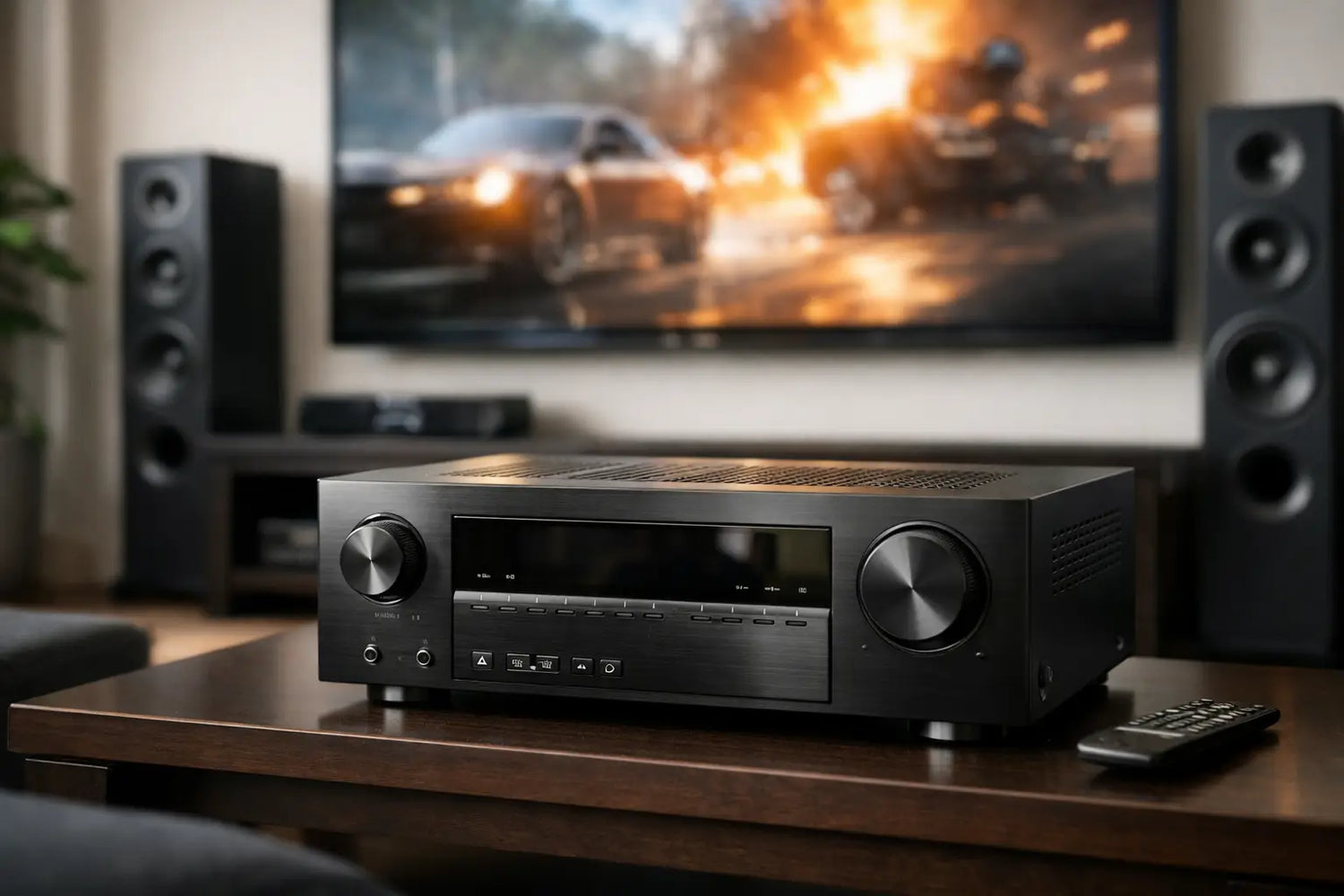
One bad receiver can flatten an otherwise beautiful theater room. You can have a sharp 4K projector, a serious speaker package, and a deep, controlled subwoofer, but if the hub of the system is underpowered, outdated, or poorly matched, the whole experience feels smaller than it should. Choosing the best av receiver for home theater is not about chasing the most expensive box on the shelf. It is about buying the receiver that gives your room, speakers, and viewing habits the authority they deserve.
For many buyers, the receiver is where confidence starts or falls apart. It decides how many speakers you can run, which surround formats you can enjoy, how cleanly your sources switch, and how well the system adapts to your room. In a premium home cinema, that matters. The right unit does not just power speakers. It shapes impact, control, immersion, and long-term flexibility.
What makes the best AV receiver for home theater?
The short answer is balance. The best AV receiver for home theater use has enough channels for your layout, enough real-world power for your speakers, current HDMI support, and room correction that actually improves what you hear. It should also fit the room you are building, not the one imagined on a spec sheet.
A compact family media room has different demands than a dedicated theater with acoustic panels, blackout treatment, and two rows of seating. In a smaller living room, a quality 7-channel receiver with solid room calibration may outperform a larger, cheaper 11-channel model simply because the amplification is cleaner and the system is easier to optimize. In a larger cinema room, though, stepping up to 9 or 11 channels can be the difference between basic surround and the fully layered overhead effects that make movies feel theatrical.
That is where buyers often get tripped up. They shop by badge, wattage, or price alone. Premium results come from system matching.
Start with your speaker layout, not the receiver
If you are planning a 5.1 system, you do not need to overspend on a receiver built for 11 speakers unless expansion is part of the plan. If you want 5.1.2 or 7.1.2 Dolby Atmos, you need enough powered channels to make that happen without compromise. If your target is 7.1.4, the conversation changes fast, because now you are looking at upper-tier models or receivers with pre-outs for external amplification.
This matters because a receiver should serve the room for years, not just for the day it arrives. Many homeowners start with a straightforward surround setup and later add height speakers, a second subwoofer, or a projector upgrade. Buying too small can mean replacing the heart of the system much sooner than expected.
For design-conscious spaces, channel planning also affects installation quality. Cleaner cable runs, better speaker placement, and hidden hardware all depend on making the right choices early. A receiver that supports the layout you actually want helps avoid a patchwork system later.
5.1, 7.1, or Atmos?
For casual movie nights in a smaller room, 5.1 still delivers a strong jump over soundbars and TV audio. For buyers investing in a real cinema feel, Atmos is usually where the magic starts. A 5.1.2 or 7.1.2 setup adds overhead dimension that makes action scenes, scores, and ambient effects feel more believable and more expensive.
If you have the ceiling height, speaker placement options, and room depth for it, Atmos is worth prioritizing over simply adding more ear-level channels. It tends to create the bigger perceived upgrade.
Power matters, but not the way many people think
Receiver power ratings can be misleading when read without context. A spec sheet number is one thing. How that receiver performs with all channels active, at realistic listening levels, in a warm room, is another.
If you are pairing efficient bookshelf or tower speakers in a medium room, you may not need massive power. If your speakers are harder to drive, your room is larger, or you like reference-level volume with real dynamic headroom, the receiver needs stronger amplification. That is especially true in premium systems where you expect clean dialogue, punchy bass integration, and effortless peaks during demanding movie scenes.
The trade-off is simple. More channels and more features at a low price often mean compromises somewhere else. Sometimes that compromise is amplifier quality. Sometimes it is thermal performance. Sometimes it is the room correction package. Serious home theater buyers should look beyond headline wattage and pay attention to build quality and speaker matching.
HDMI and video support are non-negotiable
A modern receiver should keep pace with the rest of your theater. That means 4K and 8K readiness where relevant, support for gaming-friendly features like 120Hz pass-through if you use a console, and enough HDMI inputs for streamers, media players, gaming systems, and disc playback.
If your room includes a projector, check output flexibility carefully. Dual HDMI outputs can be useful when running both a projector and a flat panel display. eARC is also valuable if you mix smart TV apps with external sources and want high-quality audio sent back to the receiver without hassle.
Futureproofing is sensible, but there is no prize for paying for features you will never use. A family that mainly streams movies and sports needs something different from an enthusiast running a projector, UHD player, gaming console, and dedicated media server.
Room correction can make or break the result
This is one of the most underrated factors in choosing the best av receiver for home theater performance. Even excellent speakers can sound uneven in the wrong room. Reflections, seating position, bass buildup, and open-plan layouts all affect what you hear.
A good room correction system helps tame those issues. It can improve dialogue clarity, smooth bass response, and create a more coherent surround field. In premium spaces, especially rooms with partial acoustic treatment, room correction often brings the system together in a way raw hardware alone cannot.
That said, room correction is not magic. It cannot fully fix poor speaker placement or a highly reflective room with no soft surfaces. The best results come when strong equipment, sensible layout, and acoustic planning work together. That is why the best theaters are designed as systems, not assembled as random parts.
Brand tiers and what to expect
In the receiver market, there are meaningful differences between entry-level, mid-tier, and premium models. Entry-level units can work well in smaller spaces and simpler systems, but they are usually best for buyers with modest channel counts and straightforward needs.
Mid-tier receivers are often the sweet spot. This is where many serious homeowners find the right balance of amplifier quality, processing, connectivity, and upgrade potential. For a well-designed living room cinema or a dedicated media room, this category frequently delivers the strongest value.
Premium receivers earn their place when the room and speaker package justify them. You are paying for more than extra features. You are often getting better internal components, stronger processing, expanded pre-out capability, improved calibration, and the confidence to anchor a more ambitious installation. In a luxury theater, that confidence matters.
The smartest way to choose
Think in layers. First, define the room. Second, define the speaker layout. Third, match the receiver to the speakers and source devices. Fourth, decide how much expansion you want over the next three to five years.
If your room is open to the rest of the house, you may need stronger output and better calibration than you expected. If it is a dedicated treated theater, you can make more precise decisions around channel count and speaker performance. If aesthetics matter, as they often do in villas and design-led homes, factor in ventilation, cabinet space, and cable management from the start.
This is also the point where bundles and expert guidance can save you from expensive mistakes. A receiver that looks impressive online can still be the wrong match for your speakers, your screen setup, or your room dimensions. The strongest theater builds come from buying components that are designed to work together.
When to spend more, and when not to
Spend more if you are building around premium speakers, planning Atmos, using a projector, or expecting the room to become a true cinema space. Spend more if you want cleaner amplification, stronger futureproofing, and less chance of outgrowing the system within a year.
Hold back if your room is small, your listening levels are moderate, and your setup will stay simple. A well-chosen mid-range receiver can outperform a flashy flagship in practical terms if the rest of the room does not need what the flagship offers.
That is the difference between buying equipment and building a theater. One is transactional. The other is intentional.
A great receiver should make every upgrade around it feel more worthwhile. When the center channel sounds anchored, the surrounds feel convincing, and the room disappears during a film, you know the foundation is right. If you are investing in a space meant to impress, relax, and pull people into the experience, choose the receiver with the same care you would give the screen, seating, and speakers. That is how cinema starts to feel like it belongs at home.

اترك تعليقًا
This site is protected by hCaptcha and the hCaptcha Privacy Policy and Terms of Service apply.