

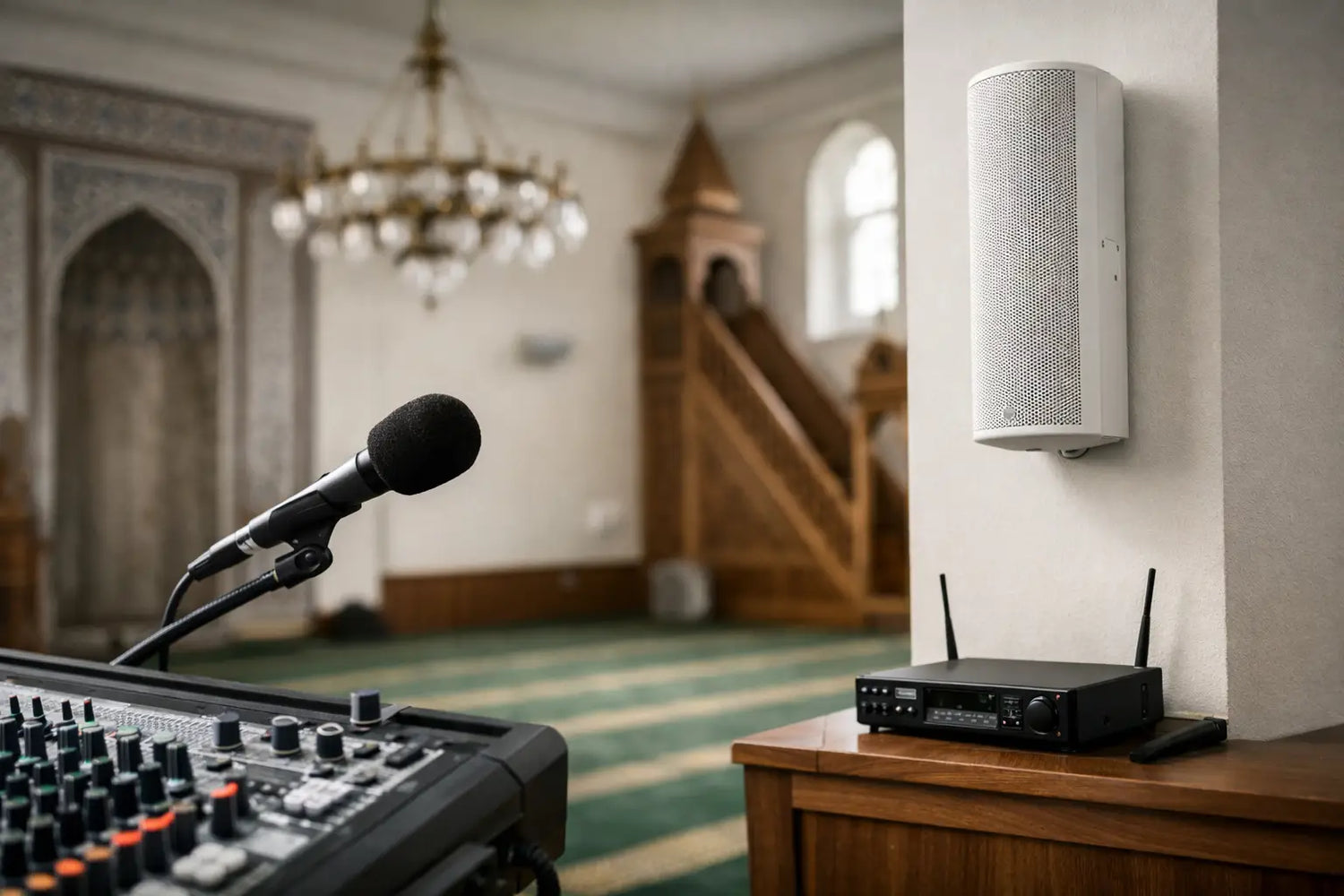
A prayer hall can look finished and still fail acoustically. The carpets are in, the lighting is right, the architecture feels dignified - yet the first khutbah reveals the real issue. Speech sounds uneven, the front rows get too much level, the back rows miss key words, and a small amount of echo turns recitation into strain. That is why mosque audio system design is not a box-counting exercise. It is a performance decision that affects every prayer, every sermon, and every listener in the room.
For mosque committees, donors, and project decision-makers, the goal is not simply louder sound. The goal is clear, even, respectful coverage that supports speech and recitation without fatigue. A strong design does exactly that. It blends the right loudspeakers, amplifier power, microphone choices, placement strategy, and room acoustics into one result that feels effortless when it is done right.
What mosque audio system design must solve
Mosques present a unique acoustic challenge. Many feature hard reflective surfaces, high ceilings, domes, marble finishes, and wide open prayer areas. These elements can look beautiful while working against speech intelligibility. If sound reflects too long, consonants blur. When consonants blur, words disappear. That matters far more than headline wattage.
The design has to serve multiple use cases as well. Daily prayers need consistency and reliability. Friday sermons need excellent speech clarity. Quran recitation demands natural tonal balance and controlled reverberation. Some facilities also need overflow area coverage, women’s prayer area audio, courtyard speakers, or external adhan distribution. One system can support all of that, but only if the plan starts with the room and the usage, not with whatever products happen to be on the shelf.
A premium result comes from asking the right questions early. How large is the prayer hall. What is the ceiling height. Where does the imam stand. Is there a minbar microphone position and a separate recitation position. Are there pillars causing shadow zones. Will there be delay speakers for rear coverage. Is the priority maximum output or maximum clarity. In mosque audio system design, those details shape every equipment choice.
Start with speech intelligibility, not volume
One of the most common mistakes is trying to fix poor clarity by adding more loudness. That usually makes the problem worse. When a room is reflective, more volume pushes more energy into the surfaces and increases the sense of acoustic smear. People may hear more sound, but understand fewer words.
The smarter path is controlled directivity. In simple terms, the speakers should aim sound at the congregation, not spray it everywhere. Column speakers, well-placed wall-mounted arrays, or properly selected distributed speakers can outperform larger conventional boxes when the brief is intelligibility. The exact solution depends on the room geometry. A long rectangular hall calls for a different approach than a square hall with a dome.
This is where premium system planning earns its value. A well-designed system creates even front-to-back coverage so the first row is not overwhelmed while the last row struggles. It also reduces dead spots near columns and minimizes excessive reflections from side walls and ceiling surfaces. Done properly, the room sounds calmer, cleaner, and more natural.
Choosing the right loudspeaker layout
There is no universal mosque speaker formula, and that is exactly the point. A compact neighborhood masjid may perform beautifully with a pair of carefully aimed column speakers and a simple mixer amplifier. A large central mosque may require a zoned design with main speakers, fills, delay speakers, and dedicated outputs for auxiliary spaces.
In many projects, fewer better-placed speakers beat more poorly placed ones. Too many overlapping sources create comb filtering and timing confusion, which makes speech harder to follow. On the other hand, too few speakers in a deep room force higher output from the front, which punishes nearby listeners. The balance is always room-specific.
A smart mosque audio system design often uses delay speakers in larger halls. These support listeners farther back without requiring the front speakers to work too hard. Timing matters here. If the delay settings are wrong, speech becomes distracting and disjointed. If they are dialed in correctly, the sound feels cohesive across the hall.
Microphones, processing, and the human factor
Even the best loudspeaker system can be undermined by the wrong microphone setup. The imam’s microphone needs clear pickup, consistent gain, and resistance to feedback. Sermons, recitation, and announcements do not all behave the same way, so microphone selection should reflect real use rather than convenience.
Gooseneck microphones often work well for fixed sermon positions. Wireless handheld or bodypack options can make sense in multi-use spaces, though reliability and battery management become part of the equation. Feedback control is also critical, especially when microphones and speakers are in closer proximity.
Digital signal processing can dramatically improve results, but it should be applied with discipline. EQ can help tame room issues and improve vocal presence. Automatic feedback suppression can protect against sudden problems. Compression may help maintain usable level. But overprocessing creates an artificial, fatiguing sound. In a worship setting, natural speech and recitation should still feel human and present.
Amplification and headroom matter more than spec-sheet hype
A mosque system should not run on the edge. Clean amplification with proper headroom gives the system control, stability, and longevity. When amplifiers are undersized, distortion rises and speech loses its composure. When power is matched correctly, the system sounds effortless even during peak use.
This is especially important in installations with multiple zones. Prayer hall audio, auxiliary rooms, exterior speakers, and women’s section coverage may each require separate level control and routing. That does not always mean a complicated system. It means a system designed to behave predictably in daily use.
For decision-makers, this is where buying a complete solution beats assembling random parts. Compatibility between amplifier, speakers, mixer, DSP, and microphones is not a minor detail. It is the difference between a polished installation and a frustrating one.
The room itself is part of the system
If the room is highly reflective, equipment alone will not fully solve the problem. Acoustic treatment can deliver a major improvement, especially on rear walls or other key reflection points. In a mosque environment, treatments need to respect aesthetics as much as performance. The right approach should preserve the dignity of the interior while improving clarity.
Carpet already helps, but it is rarely enough by itself. High ceilings and hard walls can still generate long reverb tails that blur speech. Even modest acoustic intervention can make the entire system perform at a higher level. This is one of the most overlooked upgrades because it is less visible than loudspeakers, yet the audible difference can be dramatic.
Design for operation, not just installation
A beautiful install is not successful if volunteers or staff cannot use it confidently. Controls should be clear. Presets should be simple. Microphone priority and zone routing should make sense in real operation. If every Friday requires troubleshooting, the design has failed regardless of hardware quality.
That is why premium projects focus on usability from the start. Labeling, signal flow, rack organization, and sensible control logic all matter. The best systems feel intuitive. They do not demand a sound engineer every time someone needs to speak.
For new builds and renovation projects alike, planning early saves money and avoids visible compromises later. Conduit paths, speaker mounting points, rack locations, and cable routes should be coordinated before finishing work closes everything up. Clean installation is part of performance. It protects reliability and preserves the look of the space.
When to choose a custom solution
If the mosque has a simple rectangular hall and modest capacity, a well-selected bundled system may be enough. If the building has complex architecture, multiple prayer areas, outdoor requirements, or ongoing complaints about clarity, custom design is the better move. That is where specialist AV planning earns its keep.
A serious provider does more than sell components. They look at the room, the usage, the listener experience, and the long-term reliability of the system. They build around outcomes. That approach is exactly why a specialist like AmpliMart stands apart in project-based audio. Premium products matter, but premium results come from matching them to the space with precision.
The strongest mosque audio systems are the ones nobody talks about after installation. People simply hear every word, every recitation carries with dignity, and the technology disappears into the worship experience. If that is the target, design is where the real value begins.

اترك تعليقًا
This site is protected by hCaptcha and the hCaptcha Privacy Policy and Terms of Service apply.