

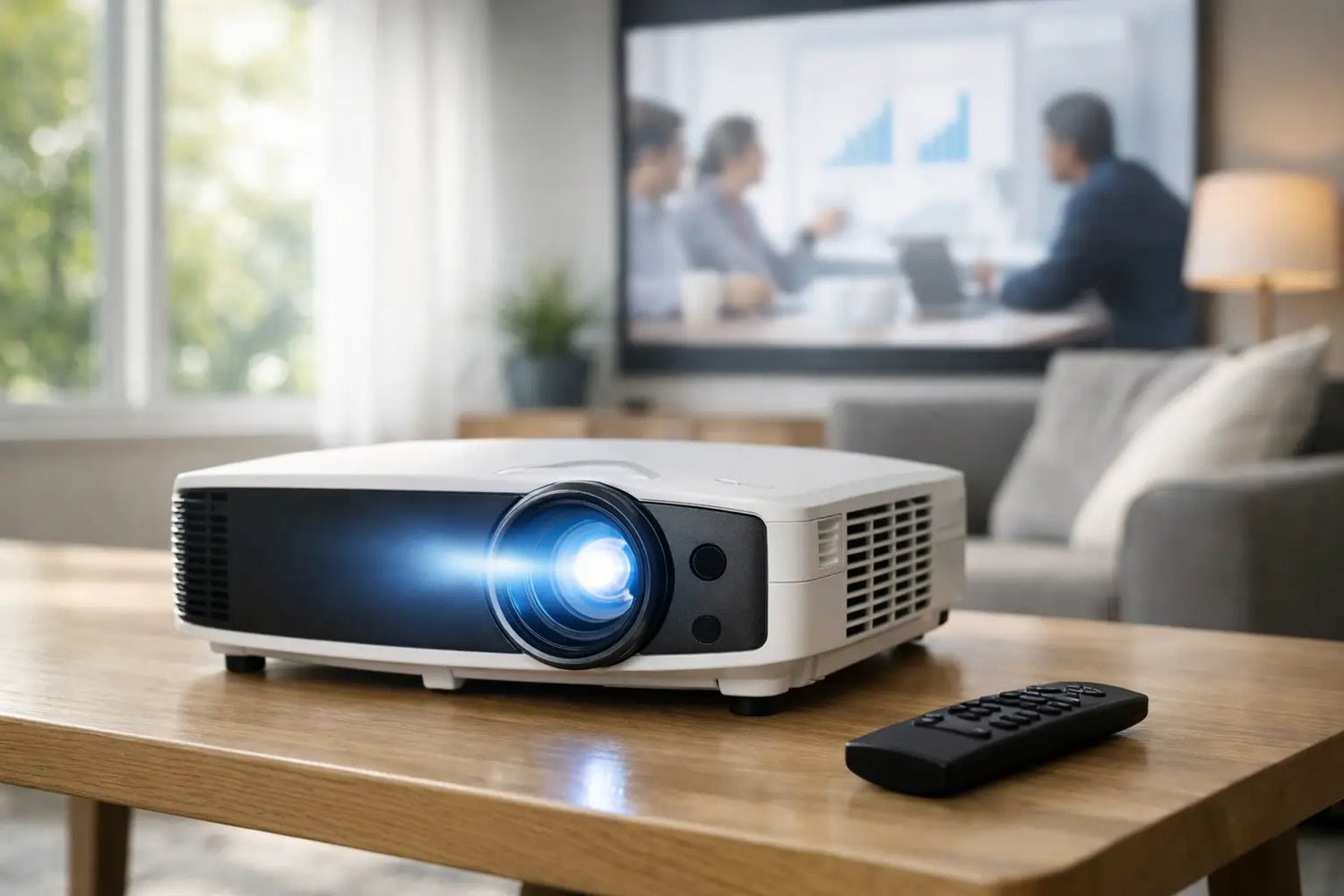
Sunlight is brutal on a projector. A model that looks stunning in a dark demo room can look washed out the moment your living room windows start doing their job. If you are shopping for the best projector for bright rooms, the real question is not just which model is brightest. It is which projector can hold contrast, preserve color, and still look expensive when the room is less than perfect.
That distinction matters. Bright-room projection is not about brute force alone. It is about matching projector type, screen surface, room layout, and viewing habits so the image stays punchy without turning your space into a blackout theater every afternoon.
What makes the best projector for bright rooms?
Brightness gets the attention first, and for good reason. In a room with ambient light, low-lumen projectors lose impact fast. Whites turn gray, black levels lift, and fine detail disappears. For casual daytime sports or TV, you generally want to start with a projector that has serious light output, not a lifestyle model that depends on darkness to look good.
But lumen ratings can be misleading when taken on their own. Manufacturers often quote peak brightness under ideal picture modes that are not the most accurate or attractive for real use. A projector may advertise a huge number, then deliver a noticeably dimmer image once you switch into a more balanced cinema or standard mode. That is why the best projector for bright rooms is usually one that combines strong usable brightness with good color volume, not just headline specs.
Throw distance also shapes performance. A projector that can create a large image from very close range often works better in bright family spaces because it avoids long light paths and reduces placement compromises. Ultra short throw models are especially popular here, not because they are automatically superior, but because they suit open living areas where ceiling mounting is not always part of the plan.
Brightness matters, but contrast is what keeps the image alive
A bright projector in a bright room can still look flat if contrast is weak. Ambient light raises the black floor, so darker scenes lose depth first. This is why premium projection systems feel more cinematic even outside a dedicated theater. They are not just brighter. They hold separation between bright highlights and darker shadow areas better.
For sports, gaming, and daytime streaming, this is manageable because content tends to be naturally bright. For movies and prestige TV, it becomes more demanding. If your goal is film-first performance in a room with windows, you are asking the projector to do something difficult. It can be done, but the screen choice and room treatment become far more important.
A common mistake is chasing the largest image possible. In bright rooms, bigger is not always better. A slightly smaller screen can dramatically improve perceived brightness and image punch. The result often feels more premium, not less.
Laser vs lamp for bright-room performance
For most buyers in this category, laser projection makes more sense than traditional lamps. Laser projectors typically offer higher perceived brightness stability, faster startup, longer life, and less maintenance. They also fit the premium, convenience-driven experience that most design-conscious homeowners want.
Lamp-based projectors can still deliver excellent value, especially in controlled environments, but bright rooms expose their compromises faster. As lamps age, brightness drops. That can turn a projector that was borderline acceptable in ambient light into one that constantly feels underpowered.
Laser models also tend to work especially well in living-room-friendly designs, including ultra short throw units paired with ambient light rejecting screens. That combination has become one of the smartest answers for customers who want a big-screen statement piece without building a dedicated theater.
The screen is not an accessory. It is half the system.
This is where many projector buyers overspend in the wrong place. They buy a high-output projector, then throw the image onto a basic white wall or a generic matte screen and wonder why daytime performance still feels weak. In bright spaces, the screen is not optional strategy. It is performance control.
An ambient light rejecting screen can make a dramatic difference by reflecting more projector light toward the seating position while reducing the impact of off-axis room light. In practical terms, that means the image holds more contrast and looks less washed out during the day. With ultra short throw projectors, you usually need a screen specifically designed for UST optics. Standard screens are not interchangeable here.
If the room has large windows, glossy surfaces, or light-colored walls, screen pairing becomes even more critical. The projector alone cannot fight the room. A proper screen gives it a chance.
Best projector for bright rooms in real homes
The right answer depends on how the room is actually used. For a living room that doubles as a family gathering space, an ultra short throw laser projector is often the strongest option. It keeps installation clean, works well with furniture-led layouts, and pairs beautifully with a dedicated ALR screen. It also feels intentional, which matters in high-end interiors.
For a media room with some light control and enough mounting flexibility, a standard or short throw laser projector can deliver more choice in pricing and image tuning. This route makes sense if you want higher performance per dollar and do not mind a more traditional installation path.
For gaming, brightness and low input lag need to live together. Some bright projectors introduce processing that hurts responsiveness. If gaming matters, check how the projector performs in its game mode, not just its brightest mode. Those are not always the same experience.
For sports fans, brightness and motion handling tend to matter more than deep black levels. A projector that stays vivid during afternoon viewing may be the better buy than one with stronger dark-room movie credentials but weaker daytime punch.
Features worth paying for and features you can ignore
Good HDR handling is useful, but in bright rooms, expectations should stay realistic. HDR looks best when a projector has enough brightness and contrast headroom to create real dynamic range. In daytime conditions, even premium models will not mimic a top-tier TV. The goal is not TV replacement on spec sheets. The goal is a far larger, more immersive image that still looks rich and satisfying.
Motorized lens controls, advanced calibration tools, and wide color support are valuable in the right setup, especially for custom installations. But if your room is bright and multipurpose, practical strengths often matter more. Stable brightness, good color in standard modes, strong screen compatibility, and easy placement will have a bigger impact on daily satisfaction.
Smart TV features are convenient, but they should not decide the purchase. Streaming platforms change, interfaces age, and external media devices often outperform built-in systems anyway. Buy the projector for image performance first.
Room design changes that improve projector performance fast
You do not need a fully blacked-out theater to get better results. A few smart adjustments can materially improve image quality in bright rooms.
The biggest gain usually comes from controlling direct light on the screen. Sheer sunlight hitting the projection surface will overpower almost any consumer projector. Curtains, shades, or strategic furniture placement can solve more than a spec upgrade.
Wall and ceiling reflections matter too. Bright walls bounce projector light back into the room and reduce perceived contrast. Even modest changes like darker paint near the screen wall, textured finishes, or acoustic panels can help the image look cleaner and deeper. That is one reason integrated AV planning consistently beats piecemeal product buying.
Screen size selection is another quiet performance lever. Many homeowners assume 120 inches is the target because it sounds cinematic. Sometimes it is. But a 100-inch image with stronger brightness and contrast can look more luxurious than a 120-inch image that always feels compromised.
How to shop with confidence
If you are comparing projectors for a bright room, focus on the full system rather than the projector in isolation. Ask how the image will perform at your preferred screen size, at your typical viewing time, with your actual window conditions. Ask whether the projector is being paired with the right screen, and whether the recommended brightness figure reflects real picture modes rather than lab-friendly marketing claims.
This is also where specialist guidance separates premium results from expensive trial and error. A projector, screen, mounting method, room finish, and seating distance all interact. When those choices are aligned, bright-room projection stops feeling like a compromise and starts feeling like a deliberate luxury.
That is why serious buyers often get better outcomes working with a dedicated AV retailer like AmpliMart rather than shopping by spec sheet alone. The winning setup is rarely the one with the loudest brightness claim. It is the one designed to perform in the room you actually live in.
If you want a projector that still looks bold at noon, buy for the room first, the screen second, and the projector third. Get that order right, and the big-screen experience stops fighting your space and starts owning it.

اترك تعليقًا
This site is protected by hCaptcha and the hCaptcha Privacy Policy and Terms of Service apply.