

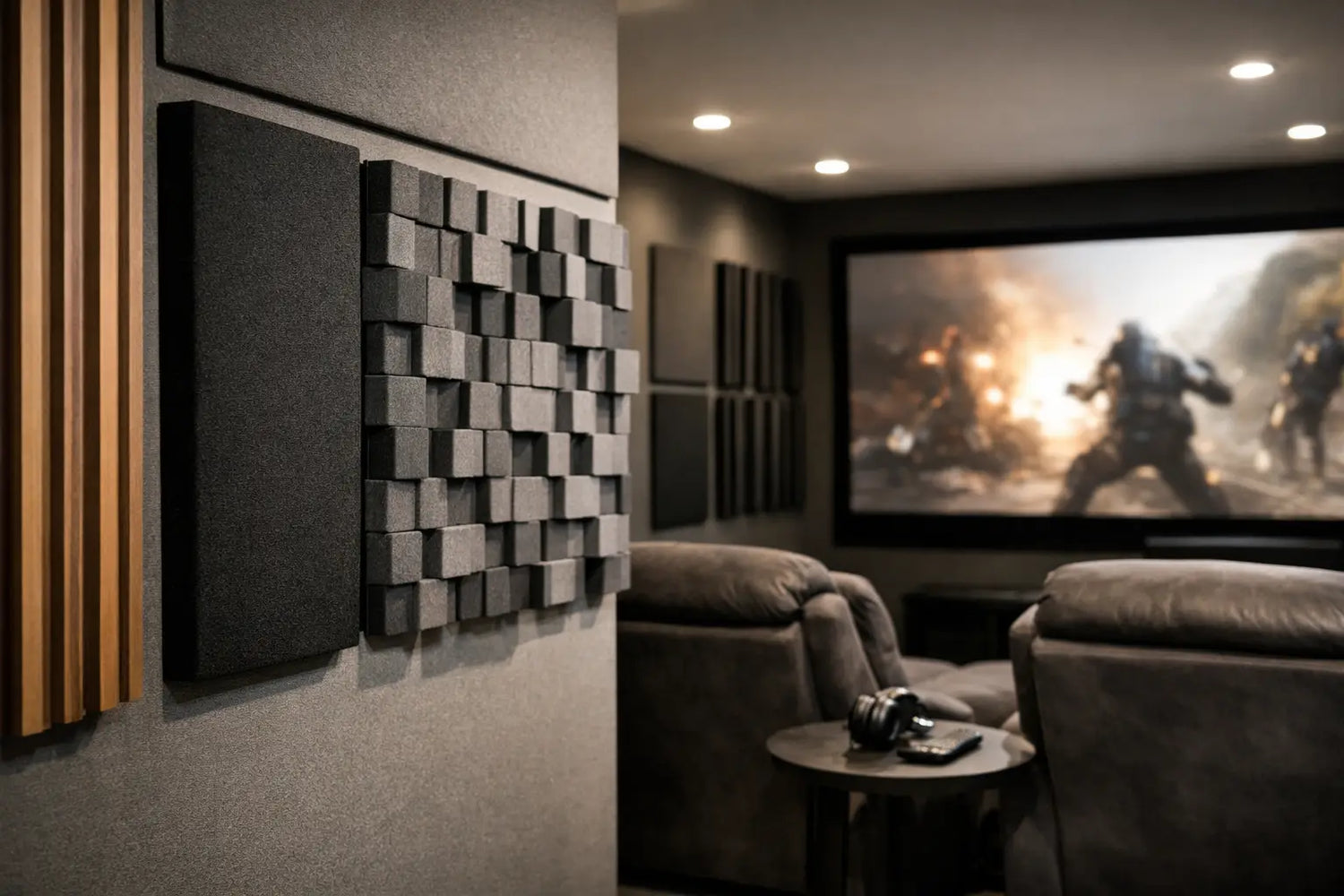
A great projector and a serious speaker system can still sound disappointing in the wrong room. That is exactly why acoustic panels for home theater matter. If dialogue feels smeared, bass gets boomy, or surround effects seem to bounce around instead of locking into place, the issue is often not your gear. It is the room.
For buyers investing in a premium cinema setup, this is where the difference between a good room and a finished room becomes obvious. Acoustic treatment does not add fake drama or change the character of quality speakers. It removes the distractions that stop your system from performing at its full level. The result is cleaner speech, more controlled impact, and a more believable sense of space.
Why acoustic panels for home theater make such a big difference
Every home theater room has surfaces that reflect sound - drywall, glass, tile, wood flooring, even a low ceiling. When those reflections arrive milliseconds after the direct sound from your speakers, your ears hear a blur. Voices lose precision. Effects feel less focused. The room starts competing with the soundtrack.
Acoustic panels absorb a portion of that reflected energy, especially in the mid and high frequencies where clarity lives. That means your front soundstage becomes more stable, panning effects move more cleanly, and dialogue sounds like it belongs on screen instead of floating around the room. In a dedicated theater, that improvement is immediate. In a living room media space, it can be the upgrade that makes expensive equipment finally sound expensive.
There is also the comfort factor. A harsh room can be tiring, particularly at higher volumes. Panels help reduce that edgy, over-reflective character, so movie nights feel rich and controlled instead of loud for the sake of being loud.
What acoustic panels actually do - and what they do not
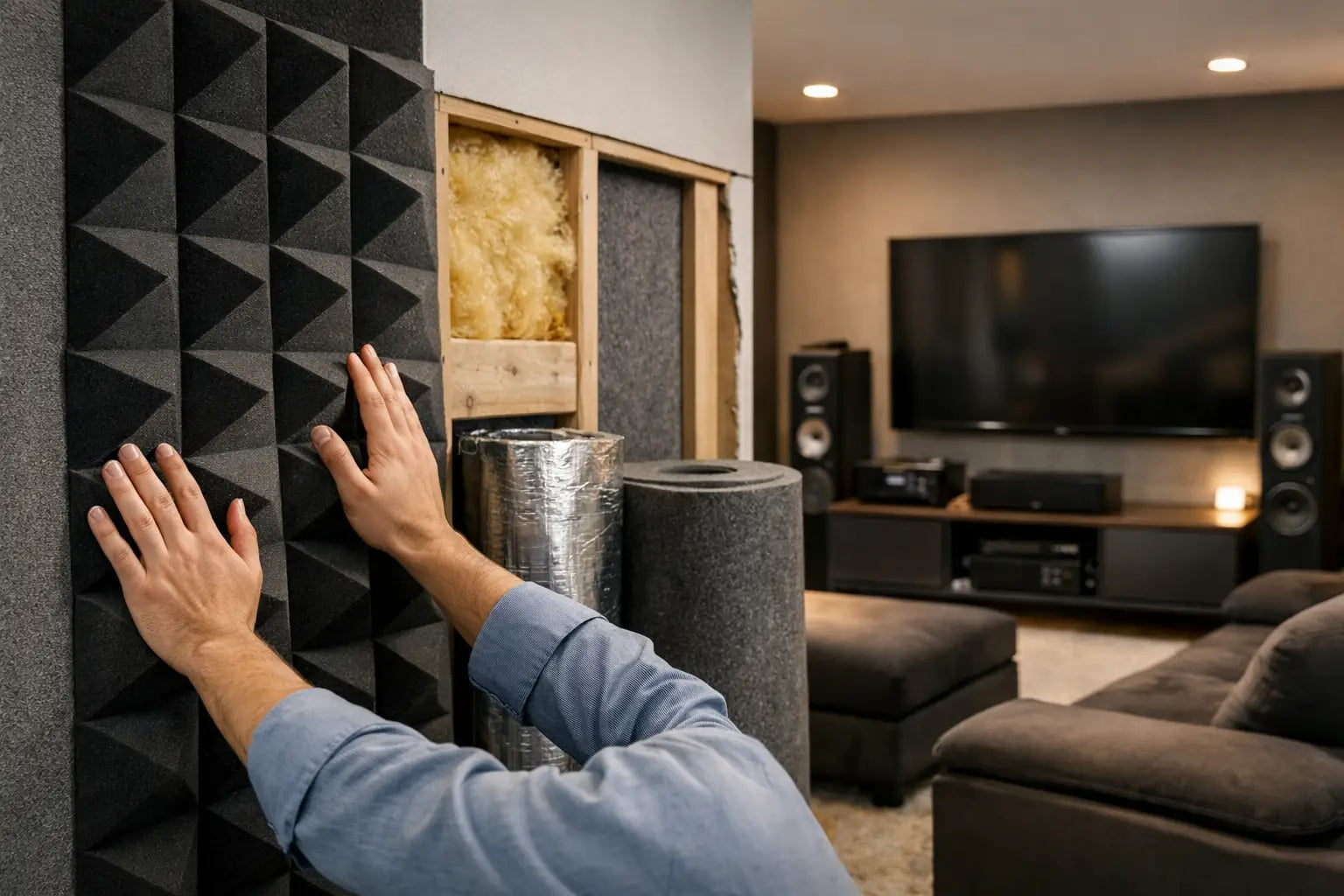
This is where many buyers get mixed signals. Acoustic panels are not the same as soundproofing. If you want to stop sound from leaking into other rooms, that is a different category involving construction, mass, decoupling, and insulation. Panels inside the room improve the sound you hear in the room itself.
That distinction matters because expectations need to be realistic. If your goal is better speech intelligibility, tighter imaging, and less slap echo, panels are exactly the right move. If your goal is keeping action scenes from reaching the next bedroom, panels help only a little.
They also do not replace bass management. Standard acoustic panels usually target reflections in the mids and highs. Low frequencies are harder to tame and often need thicker treatments or bass traps. In many rooms, the best result comes from combining speaker placement, subwoofer tuning, room correction, and acoustic treatment rather than leaning on one fix alone.
Where to place acoustic panels for home theater
Placement is where performance is won or wasted. A beautiful panel in the wrong location is mostly decor. A well-placed panel changes the way the room behaves.
The first priority is usually the side wall reflection points. These are the spots where sound from your front left and right speakers hits the walls and reflects toward the seating position. Treating those points helps preserve stereo imaging and keeps the front stage from getting cloudy.
The wall behind the screen wall or front speakers can also benefit, depending on the design of the room and how far the speakers sit from the wall. In many theaters, panels on the front wall help reduce boundary reflections and improve front-stage precision.
The rear wall is another common trouble area, especially if your seats are close to it. Reflections from behind the listener can create a confused surround field and make the room feel more aggressive than immersive. Panels here often calm the space in a very noticeable way.
Ceilings are often ignored, but they should not be. In rooms with low or flat ceilings, a few overhead panels can reduce vertical reflections that smear dialogue and effects. If you want a theater to sound composed rather than echo-prone, the ceiling deserves attention.
How many panels do you really need?
More is not always better. A room covered wall to wall in absorption can sound flat, lifeless, and overly dead. That is not a luxury cinema experience. A premium theater should sound controlled, not sterile.
The amount of treatment depends on room size, surface materials, seating distance, and how lively the room is to begin with. Carpet, curtains, and upholstered seating already absorb some sound. A minimalist room with hard floors, painted walls, and lots of glass usually needs much more help.
For many home theaters, a balanced plan works best: treat the first reflection points, address the rear wall, consider a few ceiling panels, and then assess bass behavior separately. If the room still feels too lively, add more with purpose. If it already sounds natural, stop there. Good treatment is about precision, not excess.
Choosing the right panel thickness and construction
Not all panels perform the same, even if they look similar in photos. Thickness matters. A thin decorative panel may soften a little brightness, but it will not provide the same level of control as a properly built acoustic panel with meaningful depth and dense core material.
For most home theater use, thicker panels deliver better broadband absorption and more audible improvement. That is especially true if your room has strong reflections or if you listen at cinematic volume levels. Fabric finish matters too, not just for style but for acoustical transparency. A panel has to let sound reach the absorbent core.
Then there is build quality. Premium spaces deserve clean edges, stable mounting, consistent materials, and finishes that look intentional next to seating, lighting, and screen design. That is one reason many homeowners move away from generic studio-style products and choose panels designed for residential cinema spaces. The room should sound high-end and look high-end.
Design matters because this is still your room
A dedicated home theater should feel immersive, but it should also feel considered. Acoustic treatment should never look like an afterthought. In upscale media rooms and villas, the visual presentation is part of the value.
This is where panel size, fabric color, pattern layout, and symmetry matter. Dark finishes often work well in theater rooms because they reduce visual distraction and support screen contrast. In shared spaces, lighter neutrals or custom finishes may blend better with interior design.
Some customers want the panels to disappear. Others want them to frame the room and make the cinema identity stronger. Both are valid. What matters is matching the treatment to the architecture and the purpose of the space. A family media lounge does not need the same visual language as a blacked-out reference theater.
Common mistakes that cost performance
The biggest mistake is treating acoustics as a final accessory instead of part of the system. If you wait until every other purchase is complete, you often end up fixing problems that could have been prevented with smarter planning.
Another common issue is buying too few panels for a difficult room and expecting a dramatic transformation. A pair of decorative absorbers may help slightly, but they will not solve major reflection problems in a large hard-surfaced space.
There is also the opposite mistake - over-treating the room with absorption everywhere and ignoring diffusion, speaker placement, or subwoofer setup. Home theater acoustics are rarely about one product doing everything. The best rooms are tuned as complete environments.
And finally, there is style mismatch. Premium equipment installed in a room with poorly finished treatment loses some of its impact. If the room is meant to impress, the acoustic solution needs to be part of the design brief from day one.
When professional guidance is worth it
If you are building a serious theater, especially in a dedicated room, expert planning pays off. The room dimensions, speaker layout, seating positions, wall materials, and display placement all affect how treatment should be used. Guesswork can get you decent results. A proper plan gets you closer to the result you actually paid for.
That is especially true when you are combining premium speakers, powerful subwoofers, projection, and custom finishes. At that level, acoustics should not be treated as optional. They are part of the performance package. A specialist can help you choose the right panel types, the right quantities, and the right locations without compromising the look of the room.
At AmpliMart, that complete-room mindset is what separates a box-drop purchase from a real cinema outcome. The goal is not just to sell panels. It is to create a room where every scene lands with authority.
A home theater should do more than play sound loudly. It should pull you into the movie, hold the image together, and make every detail feel intentional. Acoustic panels are one of the smartest upgrades in that entire equation because they improve what you hear every single time you press play.

اترك تعليقًا
This site is protected by hCaptcha and the hCaptcha Privacy Policy and Terms of Service apply.